


Country Life shows you how best to make elderflower cordial and wine - those most delicious of summer drinks.
The English summer is said to start when the elder blossoms and end with its ripening berries. The citrus aroma floating down country lanes also heralds a bountiful harvest for the forager and home-brewer.
Diluted with water or lemonade, served with lemon and mint, elderflower cordial is just the thing for a summer’s day. It can also make a refreshing sorbet or tasty gin mixer.
When to pick elderflowers to make cordial
The flowers taste best picked early on a dry, hot day, and speed is crucial: they should be used straight after picking.
Which elderflowers make the best cordial
The cream-coloured heads (or umbels) are tastier than the white, and don’t worry if they smell unappetising at first once they’re infused, the heady scent is delicious.
Choose umbels free of discolouring and keep them dry until you’re ready to begin to make elderflower cordial.
How to make elderflower cordial
An easy one to make, it’s best consumed within two weeks, although it’ll keep for a month if bottled and can be frozen in plastic bottles (leave some space, as the liquid expands)
Ingredients
- 20 elderflower heads
- 2½ pints boiling water
- 3½lbs sugar
- 1 sliced lemon 2tsp
- Citric acid (available from the chemist)
Method
Put all the dry ingredients into a clean pan and pour boiling water over them. Stir until sugar is dissolved. Skim off the surface scum. Cover with a cloth or lid. Stir twice daily for five days. Strain through a muslin and bottle.

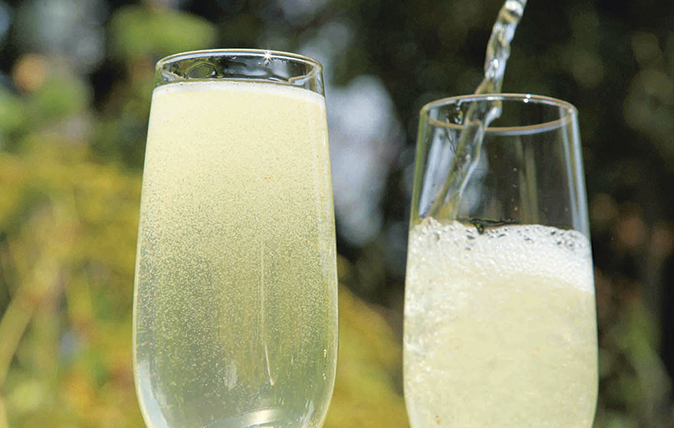
How to make elderflower ‘Champagne’
A summer drink similar to elderflower pressé
Ingredients
- 8 large elderflower heads
- 2 gallons water
- 2½lbs sugar
- 4 lemons
- 4tbsp mild white wine vinegar
Method
Dissolve the sugar in boiling water, leave to cool and add the elderflowers, the juice of two of the lemons, slices of the other two and the vinegar. Cover with a cloth and leave for a day. Strain with a fine sieve or muslin, squeezing the flowers. Store in screw-top bottles. It’ll be ready in about a fortnight and should be drunk within a month.
How to make elderflower wine
Ingredients
- 1 pint elderflowers (destalked)
- 8 pints boiling water
- 3lbs sugar
- Juice of 1 lemon
- Grated rind of 1 lemon
- ½oz yeast
Method
Add lemon rind to the elderflowers, pour boiling water over them and stand for four days, stirring occasionally. Strain through a fine sieve or muslin, then stir in sugar, lemon juice and yeast. Ferment at room temperature (not below 18˚C). When the bubbling has ceased, stir the wine and allow to settle for three days. Strain again carefully. Put in a demijohn to mature for three months, then bottle.
The folklore of the elderflower
- One name for it is the Judas Tree, as it was thought to be the tree Judas Iscariot hanged himself from
- To fell a tree without suitable protection could free a spirit called the Elder Mother to take her revenge
- The elderflower was said to be a protection against witches, and a knotted twig kept in the pocket was a charm against rheumatism
- Elderflowers were apparently never struck by lightning, and a cross of elder fastened above stables would protect the animals from evil Medicinal benefits
- Elderflower cordials and elderberry wines are high in vitamins A, B and C
- In A Modern Herbal of 1931, Mrs Grieves recommends an elderflower infusion, taken hot before bed, as a remedy for colds and throat trouble
- Mrs Grieves swears by elder leaves as an insect deterrent. The foul-smelling bruised leaves around tender plants and buds prevent attack by aphids and cater-pillars, and gardeners can add a sprig to their hatband to ward off midges
- Medical herbalist Christine Houghton says a daily elderflower infusion, made with fresh flowers, is helpful in preventing hay fever

Top 10 recipes for summer fruit drinks
Our top ten fabulous summer drinks recipes will get your mouth watering, from the rhubarb bellini to the gooseberry and

Elderflower and white-chocolate layer cake
Make elderflower macarons this summer, as well as elderflower bellinis and elderflower and white chocolate cake.

Tom Aitken’s elderflower and lemon jelly
Make the most of the summer flavours – and put some away for winter.


