How to pick a Labrador puppy
If you're after a labrador — aka 'the world's favourite dog' — you'll need to take some expert advice.

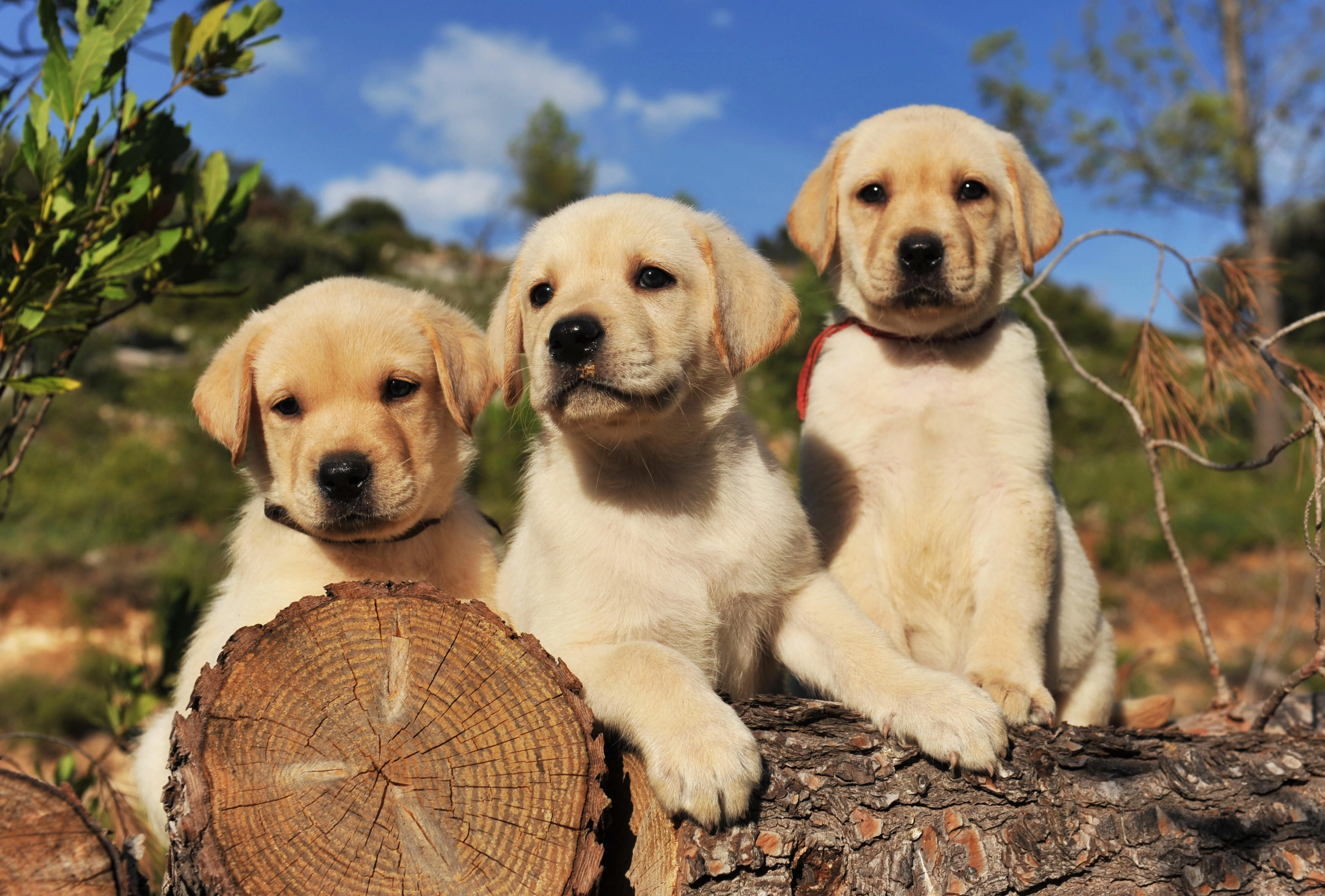
'The labrador is synonymous with loyalty, dependability, cheerfulness and a big appetite,' wrote Ben Fogle in a piece in Country Life.
'It has become the world’s most popular dog, beloved of gamekeepers and royalty, bachelors and families. It is one of the most versatile breeds, capable of working in search and rescue, as a guide dog, in medical detection, as a sniffer or assistance dog and in the theatre of war.'
Is it any wonder they remain so perennially popular? If you're on the lookout for a labrador puppy, these tips from the experts at the Kennel Club will help.


Labrador tips from the experts
Go to a specialist breeder, so that you can see the different generations of a breeding line.
Make temperament, not sex, your overriding factor when choosing.
Don't buy a show labrador if you actually want a gundog — and don't buy a gundog if you can't promise it plenty of exercise.
As soon as your puppy wakes up, take it outside. After a couple of weeks, it'll be house-trained.
When introducing the labrador to a lead, walk it with an older dog.

Possible labrador problems to look out for
Canine hip dysplasia is a genetic disease, causing the abnormal development of the hip socket, resulting in pain and lameness. It's seen in dogs as young as five months, but may not develop until maturity, and can be remedied using treatments ranging from restricted exercise to drugs and surgery. Listen for a popping sound when the dog walks, and look for reluctance to use stairs, as well as sensitivity when you touch the hindquarters.
Labradors can also be prone to retinal dysplasia, an inherited condition that affects labradors used for field work, and results in their developing blind spots. Generally, the dog can work around this by changing head position.
Progressive retinal atrophy (PRA) and central progressive retinal atrophy (CPRA) are inherited conditions that may result in blindness. Reputable breeders will be able to show certification that the dog has no eye conditions, which you should ask to see when buying a dog.
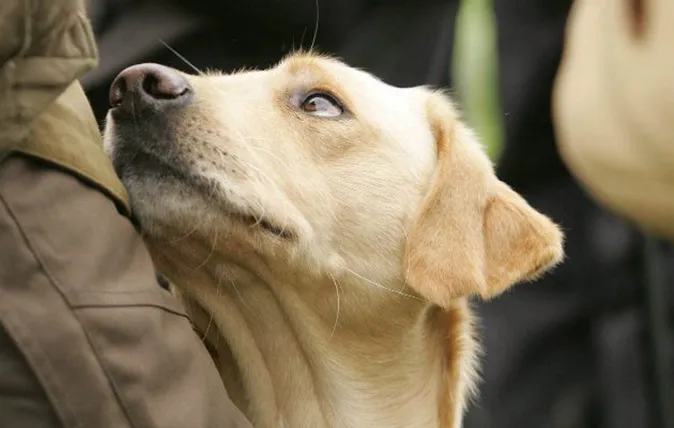
And if you're looking for a dog to show? Here's the Kennel Club's labrador breed standard
General appearance: Strongly built, short-coupled, very active; broad in skull; broad and deep through chest and ribs; broad and strong over loins and hindquarters.
Head and skull: Skull broad with defined stop; clean-cut without fleshy cheeks. Jaws of medium length, powerful not snippy. Nose wide, nostrils well developed.
Eyes: Medium size, expressing intelligence; brown or hazel.
Ears: Not large or heavy, hanging close to head and set rather far back.
Mouth: Jaws and teeth strong with a perfect, regular and complete scissor bite.
Tail: Distinctive feature, very thick towards base, gradually tapering towards tip, medium length, free from feathering, but clothed thickly all round with short, thick, dense coat, thus giving rounded appearance described as 'otter' tail. May be carried gaily but shouldn't curl over back.
Coat: Distinctive feature, short dense without wave or feathering, giving fairly hard feel to the touch; weather-resistant undercoat .
Colour: Wholly black, yellow or liver/chocolate.
Size: Ideal height at withers: dogs, 22in 22½in; bitches, 21½in 22in.

How to choose the perfect dog to fit your lifestyle, family and home
Those who grew up with dogs probably already know which breed they want to own, and have done for years.

Credit: Alamy
Cocker spaniel versus springer spaniel: What owners need to know
Which is the more popular spaniel, the springer or the cocker? Shooting Times's David Tomlinson weighs up the pros and

Cavalier King Charles spaniels: Handsome, good-natured and the aristocrats of the dog world
With a silken coat, affectionate nature and boundless enthusiasm for life, the Cavalier King Charles spaniel lives up to its

Credit: Getty
Cocker Spaniels: The irresistible dogs with loyalty to melt the coldest of hearts
As the dog world prepares for Crufts 2020, we take a look at the breed of dog which has been

Which breed makes the best gundog? The pros and cons of labradors, spaniels, terriers and more
Whether you own labradors, springers, cockers or a mix of all three, debate over which gundog is best has raged
