
Thatch under threat? Poor harvests, labour shortages and war are causing the industry to struggle
A new report from Historic England suggests that, despite high demand for the work, the profession is struggling.

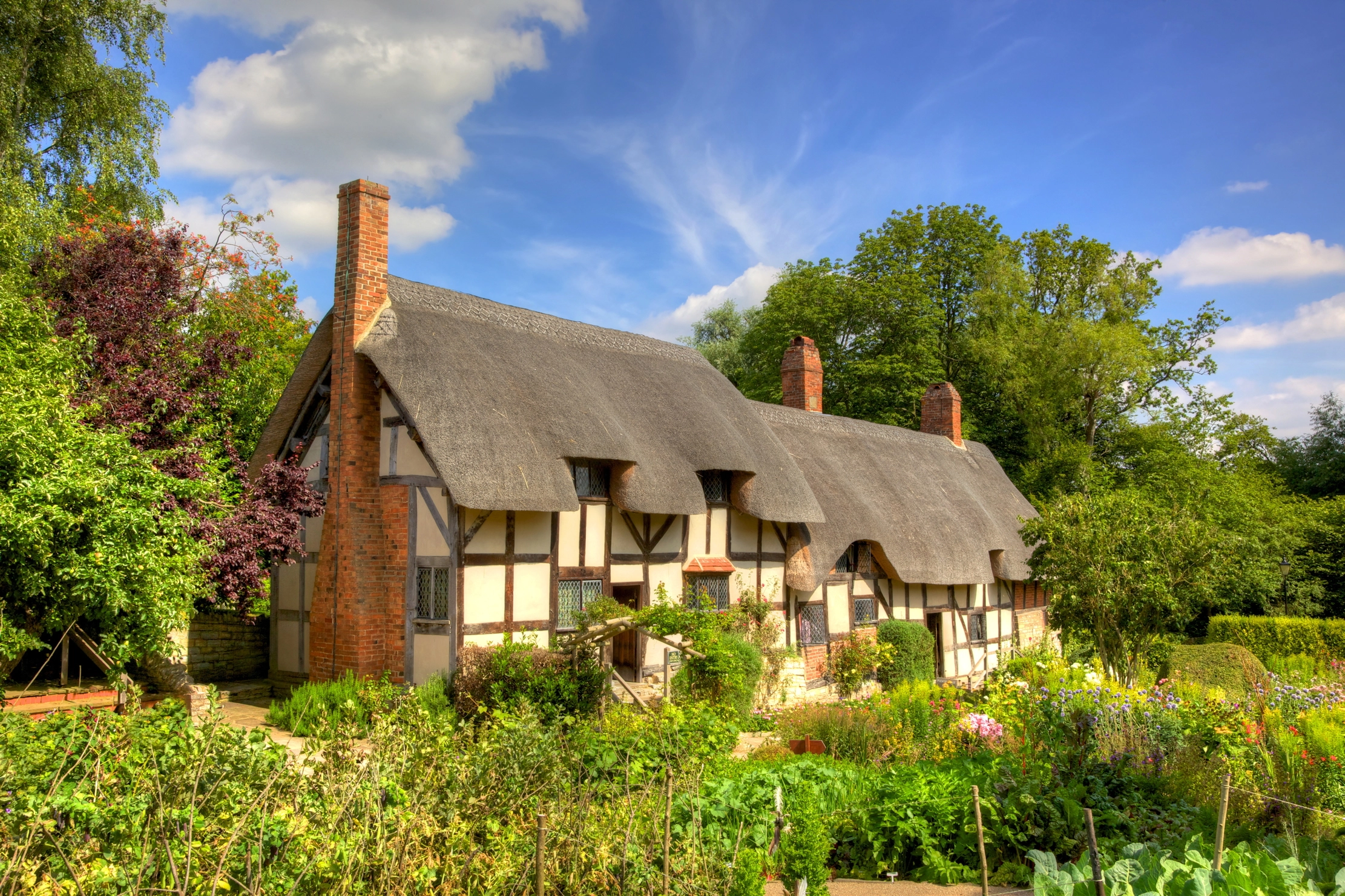
The 2024 harvest is approaching, thatchers are in high demand and a new generation is keen to enter the trade, yet the thatching industry is functioning under a proverbial leaky roof.
A Historic England (HE) report released this week, following another last year, outlines some of the issues. Thatchers face a shortage of supplies due, in part, to poor harvests in unpredictable weather and labour shortages since Brexit. Unreliable vintage machinery is the only type available (combine harvesters, which took over in the 1950s, prioritise the yield of wheat), with hard-to-source spare parts. The war in Ukraine has made things worse, too, as 97% of the water reed we’ve used in recent years has been imported, some from Eastern Europe.
There are 25,000 listed thatched buildings in England, estimates HE, and many more that are unlisted or new. Many are in the South-West, South-East and East of England and quintessential to their area’s aesthetic. Two main materials are commonly used, as HE’s Alison Henry explains, ‘cereal straw, which can be processed to make either long straw or combed wheat reed, and water reed’.
She adds: ‘Long straw was the main thatching material across most of England from medieval times until the 19th century. In a few areas, they used water reed, for example, the Norfolk Broads, other fenland areas and estuaries and parts of Scotland. Long straw has become the least well used, because it’s hard to apply. Now, I’d estimate more than half of all thatched buildings here are done with water reed and the rest straw.'
'A lot of reed is from China, Turkey or Hungary; a lot did come from Ukraine. Some of the material that comes from further afield is shipped via the Red Sea and Suez Canal, where everything is snarled up, adding to the cost. We do have extensive reed beds in this country, but they are mostly managed for wildlife, not the production of materials.’
As HE and Historic Environment Scotland continue to amass research, this latest report outlines ways to make harvesting and processing cereal straw more efficient, safer, less labour intensive and more financially viable, such as through improving existing machinery or adapting others, such as those used to harvest rice.
If growing thatching straw becomes an easier, more profitable industry, things could improve and new growers may emerge; currently, 80% of cereal straw grown in the UK for thatching is produced by 25 growers (the rest is from about 60 smaller growers). When it comes to water reed, according to HE, ‘there is growing evidence that some water-reed beds can be managed successfully for harvest and, simultaneously, to support Nature conservation’.
‘Boosting our domestically produced straw and water reed, rather than material imported from overseas, makes sense both environmentally and sustainably,’ comments HE chief executive Duncan Wilson. ‘We have an opportunity here to take positive strides in Nature conservation and biodiversity, reducing carbon emissions and building conservation, rural skills and employment. This will benefit those working in the thatching industry, owners of thatched buildings and all those who love our countryside and our historic environment.’

A single peat moor stores the carbon of 1,000,000 cars — and this 'climate-action trump card' needs urgent protection
Recent research has discovered that one moor in Yorkshire stores as much carbon as one million cars would release in

Waterside homes are cheaper than they have been in years — but it won't last
Now is the time to buy a house by the water, according to research conducted exclusively for Country Life by

'We are in the midst of a sewage scandal and the natural world is paying the cost'
Country Life's leader article takes aim at the mess in the water industry.

A £150 million, 10-year programme to help save the countryside: 'Our job is to give money away to do good things'
Lottery funding is now being used to benefit Nature with a new 10-year programme. Annunciata Elwes reports.
