The Duke of Cambridge on the countryside, wildlife and passing on his father's inspiring example to George, Charlotte and Louis
In an exclusive interview with Country Life, Prince William speaks to the magazine's editor Mark Hedges about his love of nature, wildlife and the inspirational example of his father, The Prince of Wales.

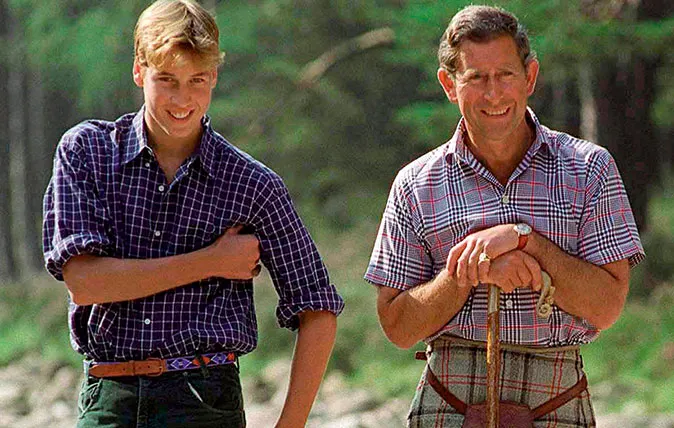
One of the many features in the November 14 2018 edition of Country Life – guest edited by HRH The Prince of Wales – was an exclusive interview with The Prince’s son, HRH The Duke of Cambridge.
Prince William spoke to Country Life’s Mark Hedges about his father’s passion for nature, how he and Prince Harry came to share those feelings and how he hopes to pass on a similar appreciation to his own children.
How do you feel about your father’s contribution to rural affairs?
My father’s focus on the environment is something I’ve looked up to all of my life. His unwavering commitment to rural issues and the countryside has been a big inspiration to me and something I am keen to emulate and teach my children about. No one understands farmers and the issues they face better than my father.
Which of his initiatives has particularly resonated with you or inspired you?
There are almost too many to mention, but the way he has used the Duchy of Cornwall to work with tenants and those around Duchy land to manage our environment sustainably has to be the most important. My father has always wanted the Duchy to invest in projects that support local conservation and sustainability, and that make a real and lasting contribution to the communities supported by the Duchy.
The creation and development of Pound-bury shows my father’s vision and courage to do things differently. The anaerobic digester and biomethane-to-grid plant, which was built by the Duchy as a joint venture with local farmers, was the first plant in the UK to provide renewable gas directly into the local community. It’s certainly something unconventional for a Duke of Cornwall to do, but my father had the courage to follow through with something he believes in.
There are so many challenges facing the people living and working in rural areas. My father has always understood what a huge natural asset the British country-side is and the important role it plays in our everyday lives. The Countryside Fund he set up helps to provide a secure future for the countryside by improving the prospects of family farm businesses and the quality of rural life.
Dumfries House is yet another example of his dedication to local communities. For my father, it wasn’t just a case of saving a few bits of brick and mortar—it was about the importance of supporting local communities and the long-term impact you can have when you invest in a place.
When did you first became aware of your father’s passion for wildlife and the countryside and how he has passed his knowledge on to you and your children?
Some of my earliest memories are from Balmoral, where my father taught me about the natural world around us—from the burns to the trees to the hills. He was also there when I went on my first trip to Africa and helped me learn about the global environment.
My father’s passion for wildlife is something that extends from his childhood to today. He is completely infatuated by the red squirrels that live around the estate in Scotland—to the extent that he’s given them names and is allowing them into the house!
He also has hundreds of bird tables at Highgrove and replenishes them by hand personally every day he is there. His passion for the environment and the natural world is something I want to repeat in the way I raise George, Charlotte and Louis.
Please can you tell us about your own commitment to wildlife and your work with your foundation United for Wildlife?
United for Wildlife works to tackle illegal wildlife trade and protect endangered species by bringing together conservation organisations, governments and global corporations. The illegal wildlife trade is valued at between $50 billion and $150 billion per year and is one of the five most lucrative global crimes.
I see the natural world as our biggest and most important asset and the key to our future prosperity. We need to protect what makes this planet special for those who will come after us. That means managing the delicate balance between growing human populations and diminishing endangered wildlife, not just because of sentimentality, but because it makes economic sense.
Poaching threatens animals, but also the livelihoods of generations to come. It is a crime against ordinary people, which robs some of the world’s poorest rural communities of their crucial natural resources. We have to work together to leave our planet in a stronger position for future generations, especially by helping communities take ownership of their natural environment and ensuring that they get to reap the benefits from the precious natural resources they have.
What does the British countryside, its wildlife and the fortunes of those who live and work in it, mean to you?
Whenever I’m with them, I am always struck by the authenticity of the people who live and work in the countryside. They are connected to the environment directly and, for the large part, are fantastic stewards.
We know that there is still more to do in areas such as biodiversity, but, increasingly, sustainability is at the heart of how we’re managing our landscape. I appreciate the rural community can feel as if there is a widening gap between rural and urban areas and that they are being forgotten. We cannot lose our connection to the rural world. As Sir David Attenborough explained, we are all dependent on the same resources on this planet and we need to close the urban-rural divide.
Like my father, I care deeply about closing this gap. I hope to follow in his footsteps in doing what I can to help those who lead rural lives and being a champion for countryside communities. So many people visit the countryside and see it as their playground, but the fact is, for many others, it is their livelihood. We need more people to recognise the role that those living in the countryside play in protecting our natural world on behalf of all of us
Finally, where is your favourite place in the British countryside?
There is nowhere I feel more relaxed, energised and at peace than the British countryside. I’m lucky to call Norfolk home and I love it there. It has everything—it has the sea, the sky, the wildlife. It’s just missing the hills! Before that, Catherine and I lived in Anglesey, which was equally stunning and somewhere we often think back to.
And, of course, a big part of me is also in Scotland—my family has deep connections there and it was such a fun part of my childhood and upbringing.

A look inside HRH The Prince of Wales' guest-edited issue of Country Life
Country Life's issue of 14 November 2018 has been guest-edited by HRH The Prince of Wales in honour of his

How to cook The Prince of Wales’ favourite dish: Pheasant Crumble Pie
See how to make the Prince of Wales's favourite dish, pheasant crumble pie, as demonstrated by John Williams, executive chef

Credit: HRH The Prince of Wales, photographed by John Paul for the Country Life Picture Library
HRH The Prince of Wales: ‘We may be the last generation fortunate enough to experience the wonderful people, skills and activities of our countryside’
HRH The Prince of Wales has guest edited the November 14 edition of Country Life. In his leader article, he
