
-
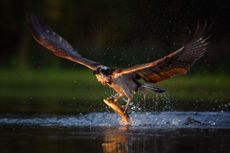 Ospreys: The bird that went extinct in Britain for 40 years, and its journey to conservation success story
Once extinct in these isles, the gargantuan, deep-diving osprey locks onto its piscine prey with a laser-like precision akin to the trajectory of a blunt-tipped missile. Naturalist and author Mark Cocker tells more.
-
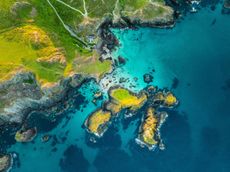 The breathtaking Cornish cove that's 'like something from a fantasy'
Ben Lerwill takes a look at Kynance Cove, the 'scenic highlight of the Lizard Peninsula'.
-
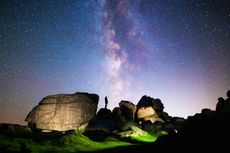 'Dartmoor is the ultimate one-billion star hotel': Why wild camping matters
Following the ruling from the Supreme Court, revisit Lewis Wink's argument on why the right to wild camp in Dartmoor is vital for us all.
-
 Centipedes, honeybees and tall churches: Country Life Quiz of the Day, May 19, 2025
Counting legs, measuring spires and more questions about Tom Cruise kick off the quiz of the week
-
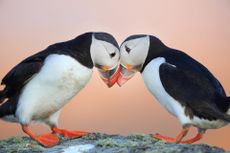 One puffin, two puffin, three puffin, four: The National Trust’s puffin count gets underway on the Farne Islands
Though the islands' shags and terns are in decline, its puffin population has been growing — and the trust is streaming a live recording of their burrows.
-
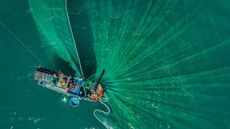 Sir David Attenborough’s record-breaking Nature documentary reveals the devastating effects of bottom trawling on our oceans
Bottom trawling is a disaster for fish stocks, but it also releases previously stored carbon back into the atmosphere.
-
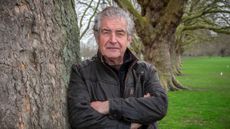 Tony Juniper: 'King Charles is the most influential environmentalist of all time'
Tony Juniper CBE, the head of Natural England, on saving the world, breeding budgies and the King's importance in raising awareness of the plight of Nature.
-
 Here Today, Gone Tomorrow: 'Nature’s ephemeral beauty reminds us of our own finite existence'
A withering rosebud, the brevity of blossom and the one-day wonder of the mayfly: Nature’s ephemeral beauty reminds us of our own finite existence, but melancholy transience also offers moments of magic.
-
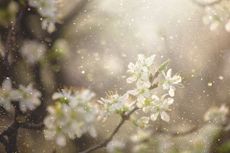 'All the floral world wants to do is procreate': Why pollen is nothing to sneeze at
Pollen often hits the headlines for making us sneeze, but it plays a vital role in far more serious matters.
-
 Britain's fastest mammal, a tropical tester and a Scottish estate: Country Life Quiz of the Day, May 1, 2025
Thursday's Quiz of the Day offers up a great country estate in Scotland.
-
 Polluting water executives now face up to two years in prison, but will the new laws make much of a difference?
The Government has announced that water company executives caught covering up illegal sewage spills could now be imprisoned for two years, under new laws — but many still have their doubts.
-
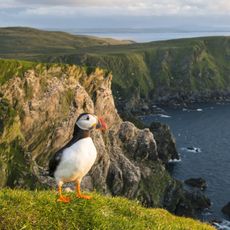 Puffins, the world's smelliest fruit and Einstein's socks: Country Life Quiz of the Day, April 30, 2025
Wednesday's Quiz of the Day wonders if you know what an 'interrobang' is.
-
 George Monbiot: 'Farmers need stability and security... Instead, they're contending with chaos'
The writer, journalist and campaigner George Monbiot joins the Country Life podcast.
-
 Exploring the countryside is essential for our wellbeing, but Right to Roam is going backwards
Campaigners in England often point to Scotland as an example of how brilliantly Right to Roam works, but it's not all it's cracked up to be, says Patrick Galbraith.
-
 Arthur Parkinson: ‘I want my chicken coop to look like the one from “Far from the Madding Crowd”’
In his second instalment of all things chicken keeping, our columnist outlines the dos and don'ts of hen house maintenance.
-
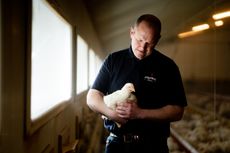 What the cluck? Waitrose announces ‘trailblazing’ pledge to help improve chicken welfare standards
Waitrose has signed up to the Better Chicken Commitment, but does the scheme leave Britain open to inferior imports?
-
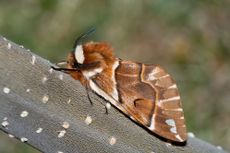 In all its glory: One of Britain’s most striking moth species could be making a comeback
The Kentish glory moth has been absent from England and Wales for around 50 years.
-
Arthur Parkinson: I am a cleaner, security guard and matron to my happy hens
In his first regular chicken-keeping column for ‘Country Life’, Arthur Parkinson introduces his brood and touches on the importance of good housekeeping.
-
 From robins and hedgehogs to the Loch Ness Monster: Professor Karen Jones on Beastly Britain
Professor Karen Jones joins the Country Life podcast to talk about the animals that populate Britain, and how they've shaped our land, our culture and our lives.
-
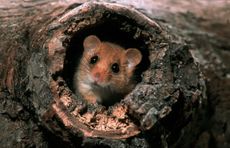 The humble hazel dormouse — 'the flagship species of the health of our countryside'
The sleepy and very sweet hazel dormouse is one of Britain's rarest mammals.
-
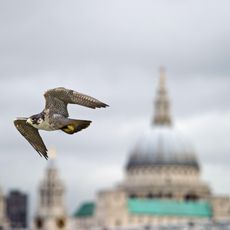 The birds of urban paradise: How to get twitching without leaving the city
You don't need to leave the concrete jungle to spot some rare and interesting birds. Here's a handy guide to birdspotting in Britain's towns and cities.


