Presented by

The curious ingredients behind a truly luxurious fragrance
A look at some of the things that come together to create Prada perfume's elusive sense of warmth and luxury.

There is a particular time in early autumn when fragrance seems to change character. The garden loses some of its summer brightness, and familiar scents take on greater depth, evoking damp earth after rain, polished wood, fallen leaves, candle wax and the faint sweetness of dried flowers. As autumn settles in, our taste in fragrance can become more complex too.
But have you ever wondered what gives a perfume that elusive sense of warmth, depth and luxury? The answer lies in some of perfumery’s most unexpected ingredients.
Ingredients that tell a different story
It is perhaps no coincidence that this is also the time of year when richer perfumes begin to feel especially appealing. Yet the most sophisticated fragrances are not necessarily the strongest. Their allure often comes from something more intriguing. From unusual raw materials, carefully balanced to create texture and atmosphere on the skin.
Take orris, for example. Derived from the rhizomes of the iris plant, it can take several years before the material is ready to be used in perfumery. Its scent is remarkably different from the flower itself. It is powdery, cool, earthy and faintly reminiscent of butter or violet. It is one of those ingredients that demonstrates just how far removed fine fragrance can be from simply reproducing the smell of a flower.
Then there is benzoin, a fragrant resin harvested from trees. Warm, balsamic and softly vanilla-like, it is often used to give perfumes a lingering sweetness and depth. Rather than announcing itself, benzoin works almost like the glow of a fire in a country house drawing room. Its effect is subtle, enveloping and increasingly noticeable as the evening progresses.
Osmanthus, a small flowering shrub native to Asia, produces an intensely distinctive scent that can combine floral, fruity and almost leathery facets.
Immortelle, meanwhile, has a warm, herbaceous sweetness that can recall caramel, honey, hay and sun-warmed vegetation. Neither fits neatly into the conventional idea of a “beautiful” floral note, and that is precisely what makes them fascinating.
Modern perfumery also has its own vocabulary for creating softness and sensuality. Ambrette seed, obtained from the musk mallow plant, has a gentle musky quality with warm, slightly fruity nuances. It offers a botanical interpretation of an effect that has fascinated perfumers for centuries, while adding a sophisticated softness to a composition.

When fragrance becomes part of the season
These ingredients become particularly compelling as the seasons turn because fragrance is, in many ways, an invisible part of a wardrobe. Just as a linen dress gives way to wool, cashmere and leather, the scents we reach for can become warmer and more textured. Woods, resins, musk, vanilla and incense begin to feel less like adornment and more like an extension of the atmosphere around us.
But warmth does not have to mean darkness. Prada Paradoxe, for example, takes a more luminous approach. Its composition combines neroli bud and citrus notes with jasmine and other florals, while amber, benzoin, vanilla and musk provide a warmer foundation. This makes the Prada perfume an interesting example of how freshness and warmth can coexist in a single composition. Rather than abandoning brightness as the weather cools, it brings the two into deliberate contrast.
That contrast is one of the great pleasures of modern fragrance. A sparkling citrus note can feel more intriguing when it meets amber, and a delicate floral can become unexpectedly sensual against musk, while a creamy vanilla can be made more sophisticated by something green, woody or faintly bitter.

Perhaps this is why the finest fragrances rarely smell simply 'rich'. They have movement. They reveal themselves gradually, with certain notes appearing and disappearing as they meet the warmth of the skin.
There is something wonderfully appropriate about wearing a fragrance that behaves in much the same way as a beautifully made room or garment. It does not need to demand attention. Its luxury lies in the details, in the quality of the materials and in the pleasure of discovering something new each time.
After all, the most memorable fragrance may not be the one that announces your arrival. It may be the one that leaves a trace in the air after you have gone.
Find out more about Prada perfume and Prada Paradoxe.
-
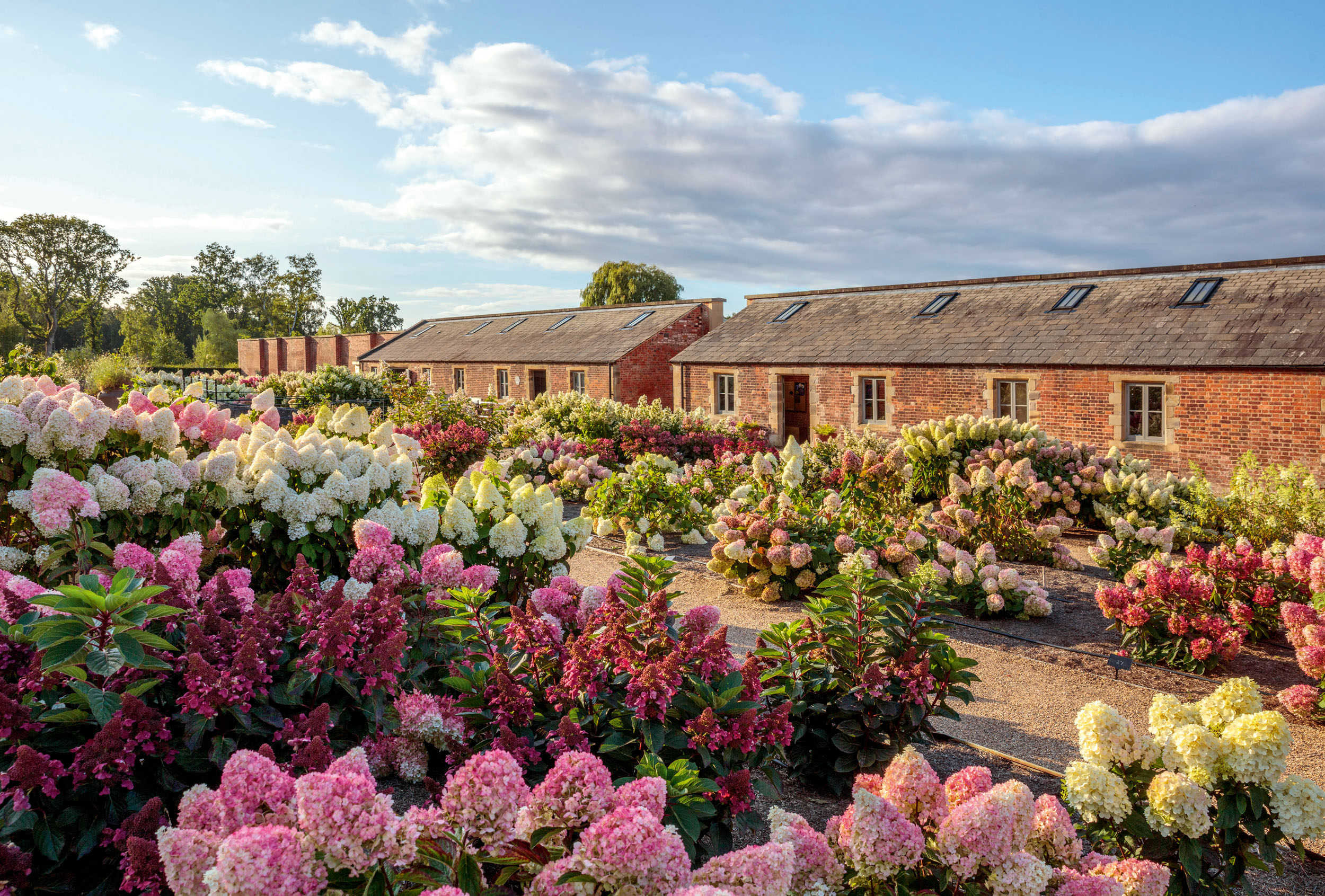 Hydrangea paniculata: The bold, brave flowers that can stand up to whatever the British climate can throw at them
No garden should be without Hydrangea paniculata, which can bloom until the end of October. Charles Quest-Ritson sums up the results of the recent four-year trial at RHS Bridgewater near Manchester; photographs by Clive Nichols for Country Life.
-
 A country house by Ben Pentreath that has one of the great masterpieces of medieval architecture in the back garden
One of the most celebrated architectural designers in Britain created this superb, modern country house right on the River Avon at Warwick Castle.

