
Be inspired by Byron's Venice
He may have been 'mad, bad and dangerous to know', but he certainly knew how to live

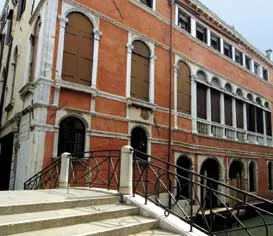
George Gordon, 6th Lord Byron, was 28 when he arrived in Venice with his friend John Hobhouse on a misty November night in 1816. The lascivious lord, famously described by Lady Caroline Lamb as 'mad, bad and dangerous to know', was on the run from his creditors, his enemies (mostly irate husbands) and the law in England, and he found life in the city of Casanova very much to his taste. With its 20,000 prostitutes, its gambling houses, its theatres and its decadent but agreeable aristocracy, post-Napoleonic Venice was home-from-home for the rom-antic Byron, and he lost no time in sampling its delights. Yet during his three-year stay, he managed to write the final cantos of Childe Harold, the poem Beppo, large parts of his memoirs, sundry other works and the first part of his masterpiece Don Juan. In late 1817, Byron moved from his flat in the Calle della Piscina, near St Mark's Square, to much grander accommodation in the piano nobile apartment of the vast Palazzo Mocenigo on the southern curve of the Grand Canal. Here, he installed his carriages, his manservant, his mistress and, on the ground floor, his menagerie of several cats, a mastiff, a pair of cranes, a fox, a wolf, at least two monkeys, and a sickly crow. The rent for the house, with its palatial rooms, cloistered gardens and views to the Rialto Bridge in the distance, was a princely ?400 a year. The original Palazzo Mocenigo comprised four distinct buildings built for the powerful Mocenigo family, seven of whom were Doges of Venice between 1413 and 1763. Byron's former residence forms the right-hand part of the central palazzo built by Alvise Mocenigo in about 1579; in 1788, the individual palazzos were linked by Alvise Giovanni Mocenigo, procurator of St Mark's, to form a huge 40-room complex where he entertained lavishly. Byron's Venetian retreat, now called simply Palazzo Mocenigo (the others being known as Casa Vecchia and Casa Nuova) passed out of Mocenigo family hands in the late 1800s, and was bought by its present Italian owners in 1929. It is now for sale, for the first time in 75 years, through Knight Frank (020? 7629 8171) and Venetian Apartments (020?8878 1130), at a guide price of ?9.2 million. As one of Venice's most prestigious buildings, the Palazzo Mocenigo is of huge architectural importance, yet, at the same time, is a grand and elegant family home. From the central androne, a private staircase leads to the main piano nobile floor via a huge classical portone attributed to Alessandro Vittoria. From the main entrance hall with its original beamed ceiling, double doors lead through to the library, the dining room and the Louis XVI drawing room, the Sala Rosa, with its balcony over the Grand Canal. Also overlooking the Grand Canal, to the right of the Sala Rosa, is the Byron Room?a vast reception room with its original 16th-century beamed ceiling, and a decorative floor incorporating the Mocenigo coat of arms. Above the fireplace, a decorative stucco panel dominates the Grand Canal end of the room; an original 19th-century print of this room shows Byron seated at his desk gazing upwards at the frieze, lost in thought. The main camera/studio has an early-18th-century frescoed ceiling by Guarana,Venetian terrazzo flooring and an ornamental balcony; three further bedrooms with bathrooms overlook the palazzo's rear gardens. A separate staircase leads to a large laundry room on the upper mezzanine level, and to two bedrooms and a further bathroom on the upper floor. Despite the constraints of draconian conservation regulations, the current owners have improved the interior in a number of subtle, but significant ways. The master bathroom dates from the 1930s, and is pure Art Deco. The kitchen which, as in all Venetian palazzos, was originally on the top floor, was moved next to the dining room on the main floor. The fabric lining the walls of the Byron Room was stripped off to reveal the original green marmorino walls beneath. And the piano nobile itself was divided into a series of rooms leading from the garden side of the house through to the Grand Canal, to create a more interesting layout. In the early 19th century, Byron enjoyed all this for a mere ?400 a year. Yet, given that, according to Forbes magazine, the piano nobile apartment of another Mocenigo palazzo is reputed to rent for around $45,000 a week or $155,000 a month, the 21st-century asking price of ?9.2m for this slice of Anglo-Venetian heritage, does not seem unreasonable. This article was published in Country Life magazine, December 22/29 2005


For more on property, architecture, the arts and the countryside subscribe to Country Life magazine

Contact us about this story
Search all online stories
For what's in the magazine this week see contents
Sign up for our free newsletter
