In the battle of British and American stuntmen, there's only ever been one winner
The British stuntman is an institution nearly as old (and as full of astonishing stories) as cinema itself.


In our divided age, casting announcements are a particularly fraught affair. When the news broke earlier this year that British actor David Jonsson (The Long Walk, Industry) had been picked to be Marvel’s new Black Panther, the court of public opinion roared into action.
Preferred courtroom? Social media. The charges brought against Jonsson — who will be playing the king and protector of the fictional African nation of Wakanda — included his nationality. ‘Are Black British actors taking roles from Black American talent?’ wrote someone on Twitter (now X).
White actors have faced similar backlash, including Tom Holland (Spider-Man), Dominic West (as Jimmy McNulty in The Wire) and Daniel Craig (as Benoit Blanc in Knives Out). In fact, the debate is almost as old as cinema itself.

Choreography of war: long takes in the trenches of '1917' required meticulous planning.
A cursory look at early-20th-century trade papers sees them complaining that American performers were losing prestige roles to British talent. By the 1950s, professional competition was also brewing further down the credits, between American and British stuntmen. Hollywood had a headstart and was better organised, with film-makers using champion male and female rodeo riders to pull off daring feats of horsemanship. Britain’s studios called on a ramshackle group of audacious circus performers, factory workers, bar men and cab drivers looking to make a quick bob.
‘You could be sitting in the dressing room and the assistant director or the stunt coordinator would come up and say: “Who wants to fall down the stairs?”, and you’d say: “How much?”,’ remembers one of them, in the 2021 feature documentary Hollywood Bulldogs: The Rise and Falls of the Great British Stuntman (ITVX).
Out of these reckless operators, however, emerged a group of legendary performers who would revolutionise the industry: Nosher Powell, a six-foot-four-inch former heavyweight boxer who sparred with Muhammad Ali, Ray Austin, Bob Simmons, Jock Easton and British commando veteran Joe Powell.

The latter, doubling for Sean Connery in the 1975 film The Man Who Would Be King, plummeted 100 feet from a collapsing rope bridge (the war hero was the director’s last hope after every man in the film’s vast American stunt team all declined to give the hair-raising drop a go). Co-star Michael Caine point blank refused to watch. Powell’s crash pad — a stack of cardboard boxes and mattresses — was assembled on a ledge and, if he missed it, there was another 1,000 feet to go. Thankfully, he didn’t. In fact, he climbed back up, asking how it had gone and if the crew wanted to do another take.
When Ray Austin, who contributed to Hollywood Bulldogs two years before his death aged 90, left the army, he discovered that post-war Britain had surprisingly little use for a man whose chief qualifications were discipline and a formidable grounding in physical training. A career as a PE teacher came to nothing, so he worked as a chauffeur.
One night, Austin was asked to ferry Cary Grant around London and, when they stopped for a coffee, valiantly intervened when a violent customer rounded on the debonair actor. His cool-headed bravery won him a foot in the door of the industry and he progressed from stunt performer to stunt coordinator to, eventually, director.

Bob Simmons dons heels for a fight in 'Thunderball' in 1965.
For all the laissez-faire, derring-do of Britain’s early film sets, these silver-screen bruisers had seen plenty of real-life action on real-life battlefields and were seldom fools. They knew how to fall, how to take a blow, when to keep their heads down and how to behave. Their military training was their safety net — in the absence of a real one.
The 1960s marked a Golden Age: productions such as the James Bond films demanded increasingly sophisticated car chases, fights and high falls; British stuntmen gained an international reputation for precision and ingenuity. By the 1970s, our stunt performers were working across both Hollywood and major television series. Their culture of apprenticeship and technical experimentation created remarkably resilient arenas in which our homegrown talent continues to shine.
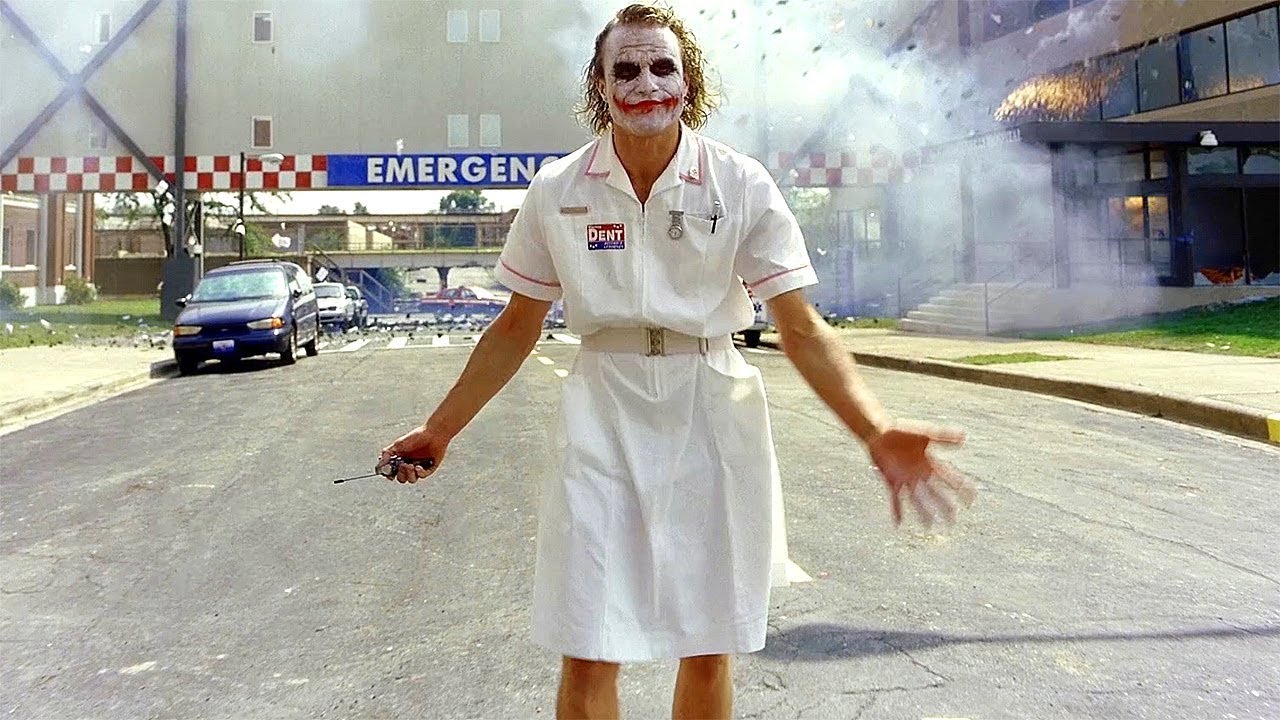
Think of Chris Corbould’s mindblowing coordination of that explosion in 2008’s The Dark Knight (he used a carefully plotted sequence of squibs, air cannons and explosives to demolish a real, albeit empty, hospital, setting a benchmark in practical-effects filmmaking) or George Cottle’s mindbending organisation of the lengthy car chase in 2020’s Tenet, that sees the vehicles move forwards and backwards in time.
Also of note are Anthony Skrimshire and Arran Topham’s efforts in the First World War epic 1917 — also from 2020 — in which, as George MacKay’s stunt doubles, they tumbled into trenches and ran seamlessly through exploding artillery shells (although the impact may not have killed them, it would likely have disfigured them), all in a tightly choreographed sequence made up of takes that sometimes lasted as long as nine minutes.
From headline-grabbing bangs to subtle foot chases, Britain’s stunt performers and coordinators know how to make screen action feel convincingly real. Surely, they are a shoe-in for the Oscars’ new competitive category for Best Stunt Design when it is awarded for the first time at the 100th Academy Awards in 2028.
See more of the best skip the rest — add us as a preferred source in Google and you'll see more from Country Life when you're online.
This feature originally appeared in the April 30, 2026, issue of Country Life. Click here for more information on how to subscribe.
