Giles Kime: 'Never let anyone persuade you that this rural reductivism is simple'
The simple look that couldn’t be more complicated says our Interiors Editor.

There was, in the 1990s, a counter-cyclical knee-jerk among interior designers against fussiness in its forms. The previous decade had been amazing, but quantity had subsumed quality and, suddenly, most inhabitants of fashionable west London postcodes under-took a dramatic decorating detox, painting their floorboards and hanging cream blinds.
The joy was that the look was cheap. A few litres of white paint are so much less expensive than wallpaper, knicker blinds, paint finishes and acres of beige Wilton. The look sparked a new publishing genre: interior books, all with the word ‘simple’ in the title, featuring simple pictures of simple things and text that offered statements of the blindingly obvious. In the USA, the cult of simplicity got its own magazine, Real Simple, which at its peak sold 7.6 million copies a month.

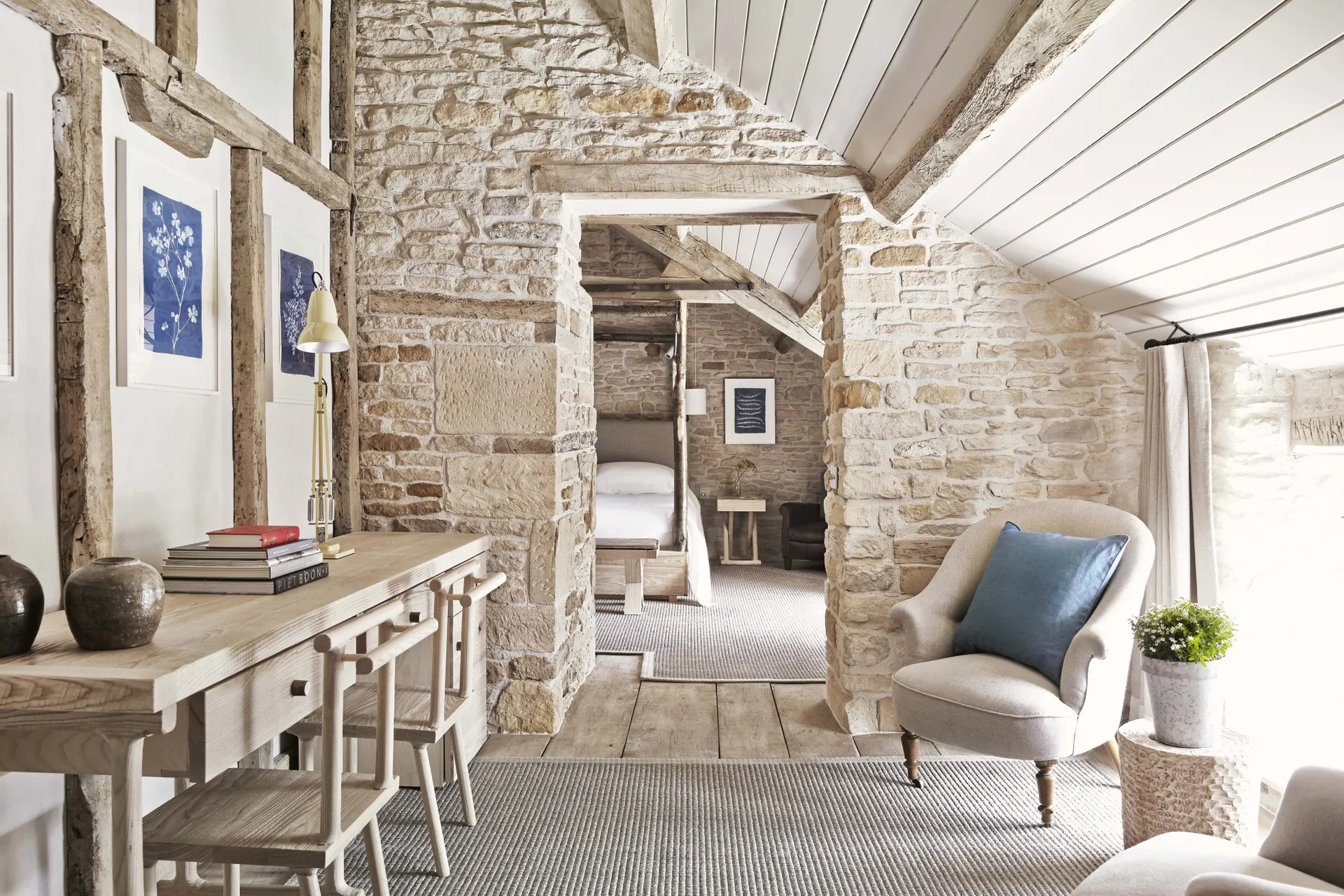
Originally the old schoolhouse for children of tenants who lived in Daylesford Village, Wisteria Cottage is the smallest in the hamlet.
As part of the reinvention of country houses, a new focus on materiality has seen designers and architects paring back houses to their structural framework, revealing stone, brick and beams that a generation ago would have been plastered or carpeted over.
Spaces have been simplified, too, particularly in smaller houses, where removing a wall, pushing into the eaves or opening up staircases can transform the humblest cottage into something quite light and airy. It’s a look that French architects and builders have always understood, especially in the south, where stone farmhouses lend themselves to being unpicked and unpeeled.
It’s an approach to the look that has become a hallmark of estate houses, cottages and pubs, such as The Wild Rabbit at the Daylesford estate in the Cotswolds, where Lady Bamford has been unwavering in carving out her own aesthetic that seamlessly blends texture with modernity.
Never let anyone persuade you that this rural reductivism is simple; reinventing buildings so that they appeal to a modernist sensibility requires clever design, artful construction, ingenious structural engineers and lots of hidden steel beams.
If the technical aspect of the challenge sounds complex, however, it’s not as hard as the spatial planning and sourcing of materials that will add richness and warmth to rooms that could otherwise look austere. Unlike more layered interiors, there’s no hiding behind colour or clutter, nor strategically placed artworks to cover a multitude of sins.
What is refreshing is its honesty; it is blissfully devoid of the pastiche and nostalgia that have been a mark of country houses for far too long.
