Meg Walters: The BBC's 1995 adaptation of 'Pride and Prejudice' is the ultimate Millennial fairytale
The BBC's 1995 adaptation of Jane Austen’s 'Pride and Prejudice' adaptation is 30 years old. Beloved by Millennials everywhere, it set a benchmark for period dramas that still stands today.


It is a truth universally acknowledged that Millennials ardently admire and love the 1995 BBC version of Pride and Prejudice. We love Jennifer Ehle and her fine eyes as the sparky Elizabeth (Lizzie) Bennet. We love the stately awkwardness and sizzling stares of Colin Firth as Mr Darcy. We love the turns about the room and the walks to Mereton and Mary insisting on singing like a dying cat and Kitty not coughing for her own amusement and skirts six inches deep in mud, and yes, that wet white shirt. We may have been children when it first aired, but, somehow, it has become the touchstone of period dramas.
One of the most faithful adaptations of Jane Austen's best-known book to date, the six-part miniseries follows the unlikely love story of witty, vibrant Elizabeth Bennet and wealthy, brooding Mr Darcy. It was a huge hit when it was first released, 30 years ago, with around 10-11 million of us tuning in each week. And when it became available on VHS, the tapes sold out in two hours. Remarkably, its popularity has only grown.
Like me, younger Millennial fans probably have their mothers to thank for showing it to them, on video, as they came of age, and just in time for Bridget Jones’s Diary, the 2001 film adaptation of the book of the same name — loosely based on Austen’s novel and starring Colin Firth. Now those same Millennials who first fell for the period drama all those years ago are making their own films and TV shows and, perhaps unsurprisingly, they’re all falling back on the same source material.
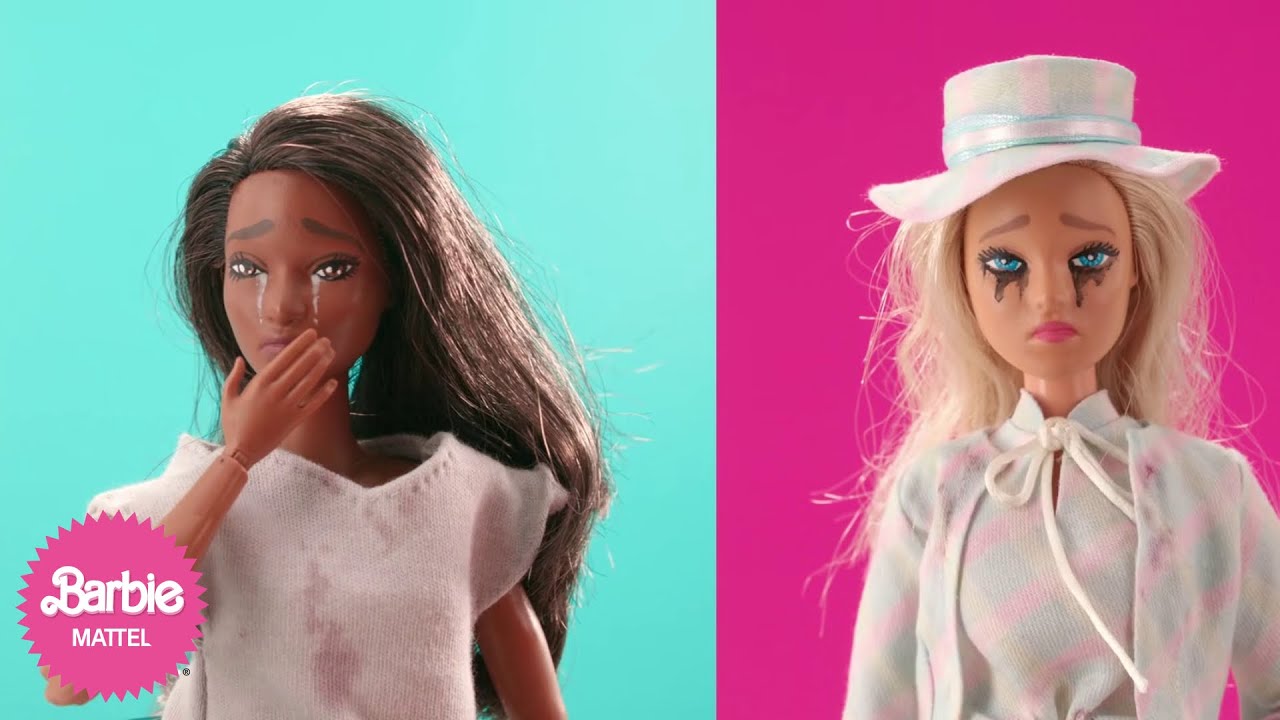
Take Greta Gerwig's Barbie, for instance, which included a knowing nod to the generation's obsession with the series. In a mock commercial for ‘Depression Barbie’, a chirpy voiceover says: ‘She wears sweatpants all day and night… and she's going to watch the BBC's Pride and Prejudice for the seventh time until she falls asleep.’
This year's Netflix hit Too Much, written by Lena Dunham, creator of Girls and the Millennial’s unofficial pop culture queen, follows a young American woman whose only comfort is ‘love stories set in pastoral England’. ‘The romance, the honour!’ says the series’s heroine. ‘I mean, no one is f***ing an influencer in the works of Jane Austen.’ Her particular favourite is Emma Thompson's adaptation of Sense and Sensibility, also turning 30 this year, and a natural companion piece to the BBC's Pride and Prejudice.

And, of course, it would be remiss not to mention Bridgerton (above), Netflix's wildly-popular Regency romance series (think brash Austen with more sex) which, in season two, pays homage with its own wet-shirt scene. The hype extends to the theatre world, too, including Australia's boozy satire Plied and Prejudice, which opened in London earlier this year (I went and was surrounded by drunk ‘depressed Barbies’ having the time of their lives) and to social media. Online, Millennial and sometimes Gen Z creators proclaim their love for the 1995 adaptation with one, Ben Fensome, inspired to lipsync his way through the entire series (well, an abridged version).
Greta Gerwig labelled the show a comfort watch, but I think our generation’s obsession goes much deeper than just sentimentality.
For one thing, it is still, quite simply, an excellent piece of television. The performances are astounding — not only the sharp, wry wit of Jennifer Ehle, or the gloomy snobbishness of Firth, but also of the impeccably-drawn side characters. The frenetic, grinning cruelty of Anna Chancellor's Caroline Bingley! The greasy simpering of David Bamber's Mr Collins! The vibrating shrillness of Alison Steadman's Mrs Bennet!

'Still, quite simply, an excellent piece of television': The BBC's 1995 Pride and Prejudice with Jennifer Ehle and Colin Firth.
Then there is the revolutionary way in which it was made. Pride and Prejudice was one of the first BBC series to be made on film as opposed to videotape shot in a BBC studio. ‘I don't feel [videotape] serves drama well,’ producer Sue Birtwistle explained at the time. ‘It always looks undernourished; it's too present, too literal. Unpoetic, if you like.’
Film meant that writer Andrew Davies had the freedom to paint with larger and more cinematic brushstrokes in his storytelling. His script is both faithful to the original text and freer than the more traditional adaptations that had come before. This was a new adaptation for a new generation — much like Bridgerton is a new take on period dramas for a new audience. Yes, there’s that infamous wet-shirt scene, but there are also bits that serve to humanise Lizzie. We see her running through a field, wrestling a stick from a dog, and stomping through the mud.

The success of Pride and Prejudice proved to studios that audiences were hungry for high-quality, cinematic TV adaptations — and it helped to remove some of the stuffiness from the genre, paving the way for the use of more contemporary vocabulary, makeup and costumes. Needle drops — the use of a pre-existing song or piece of music in a scene — became common-place. Occasionally, the impulse to modernise goes too far. Certain Hollywood period pieces have tried to twist the original source material into something it isn't, injecting 21st century attitudes into 19th century characters (yes, Netflix's Persuasion, I am looking at you). Perhaps one reason Millennials keep returning to the 1995 version is that it hits that period drama sweet spot without tipping too far into the absurd.
Lastly, there is the droll social commentary on marriage. To the uninitiated (read: offline), the Regency world where a woman’s only hope of financial security comes courtesy of a ‘good marriage’ likely seems vastly different from the one we’re all living in. But look again. On social media, a growing number of young people are beginning to sing the praises of just such a thing. Earlier this year, the TikTok audio: ‘I'm looking for a man in finance, trust fund, 6ft5, blue eyes’ went viral. And in the summer, cinema-goers accused director Celine Song of using her film Materialistis, whose protagonist chooses to marry for love over money, as a shameless vehicle for 'broke man propaganda’. Similarly, in Amazon Prime’s The Summer I Turned Pretty, fans were horrified by the tiny diamond engagement ring presented to main character Belly.
If reactions have changed at all since the programme’s initial release, it’s that 21st century women are starting to side with Mrs Bennet over her daughter, Lizzie, who says to her sister: ‘I am determined that nothing but the deepest love could ever induce me into matrimony’ (a rare stance to take in the 19th century). Enter Mr Darcy, a frankly unpleasant man who is horrified by his attraction to a girl with ‘relations whose condition in life is so decidedly below his own’. It is only after she turns him down that he is forced to reckon with the pitfalls of his own pride — and change for the better (Lizzie has a few prejudices of her own to reckon with, too). And though we root for Mr Darcy and Lizzie’s love story and for their positive character arcs, he also still happens to solve all of her financial woes. Perhaps that is the ultimate millennial fairytale.
