Sheep are getting bad press. Is any of it fair?
Some blame the beasts for desiccating already arid land, while others want to ban wool. When, and how, did sheep become such scapegoats?

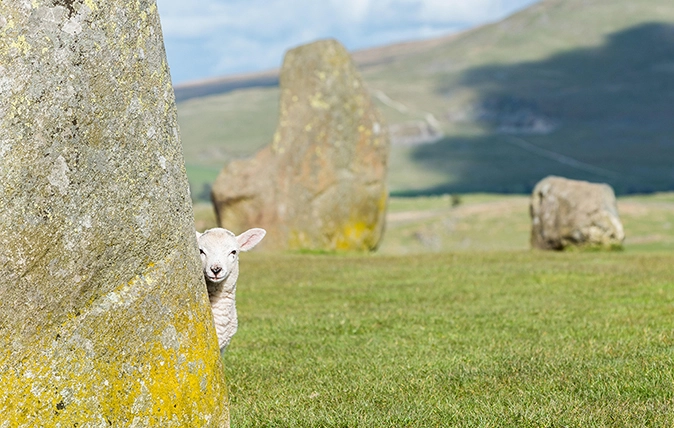
‘We need to get rid of the sheep,’ says Derek Gow as he shepherds his flock into a truck, never to be heard of again. Thus goes our first encounter with the farmer and rewilding enthusiast in James Dawson’s documentary Derek vs Derek, which lands in cinemas on Friday.
The film pits the farmer against his neighbour, Derek Banbury, a follower of the old church who worships livestock and neatly trimmed hedges. Gow, for his part, prefers the chaos of the natural world — and sheep are the enemy. ‘They eat everything right down to the root,’ he says. Must they go so nature can flourish?
It is a fair question. Dawson’s film reveals that Gow’s rewilded land continues to flourish even in the summer. The neighbouring land does not. As the heatwave rages on, it turns arid and grey. Is it fair, however, to point the blame at sheep? Although their narrow mouths and split upper lips can certainly make meat of grasslands, the right rotational management can ensure, conversely, that wildflowers flourish. Like Banbury’s farm, it is a grey area.
So, too, is rewilding. Not all initiatives have led to bountiful growth; some, in fact, have been blamed for August’s wildfires due to increased fuel loads. Yet the sheep remains a scapegoat. Wool, too, is facing renewed scrutiny from activists, who crashed several shows at London Fashion Week brandishing placards attacking the sector. In our ecologically critical era, it beggars belief that anyone would chastise the cultivators of a natural material over those who produce synthetic fibres such as nylon and polyester. Yet here we are.
Elsewhere, some sense prevails. Connolly, a leather-goods brand in Mayfair, has doubled down on its support of local wool manufacturers via its Knitwise initiative launched in 2019 with The King’s Foundation. Makers have been commissioned to create knitted artworks for the 2026 collection, which will be launched on October 7 and is inspired by the rare breeds of Dumfries House in Ayrshire, where Shetland, Boreray and Castlemilk Moorit sheep roam the open pastures. Winemakers, polishing off this year’s harvest, have found in Babydoll Southdowns — a miniature English breed — and their French cousins, Ouessants, organic landscapers of the highest order; which, unable to reach the fruit of the vine, munch instead on the weeds that might corrode it.
Clearly, getting rid of sheep for nature’s sake is not so cut and dried.
Derek Vs Derek (Dartmouth Films) is out in cinemas now.
Exquisite houses, the beauty of Nature, and how to get the most from your life, straight to your inbox.
This feature originally appeared in the September 30, 2026, issue of Country Life. Click here for more information on how to subscribe.

Will Hosie, our Lifestyle Editor, writes Country Life's Stuff & Nonsense column and looks after the magazine's London Life pages. He edits the Frontispiece and the annual Gentleman's Life supplement, and contributes regular features on lifestyle, food and frivolities.