Hamnet won the top film award at the 2026 Golden Globes — but where in the British countryside was it filmed?
Herefordshire is the very picture of what England is in the collective mind’s eye.


There’s an old paperback by my bedside in Herefordshire titled Life in Shakespeare’s England. It’s one of those pale blue Pelican books. Speaking of another age, it’s actually a manual on how to live life in the Welsh Marches, even now. After all, little has changed in these ancient borderlands between England and Wales in the four centuries since Shakespeare’s era.
When I walk across the local fields with my two spaniels, I constantly encounter vistas frozen in time. The farms and barns, the churches and belfries are exactly as they were when the Tudors were on the throne. You half expect someone to step out in a doublet, or a chamber pot to be discharged through an open window. In Herefordshire, your imagination can run riot. So it’s little wonder the makers of the much-anticipated adaptation of Maggie O’Farrell’s hit novel Hamnet came here to film.
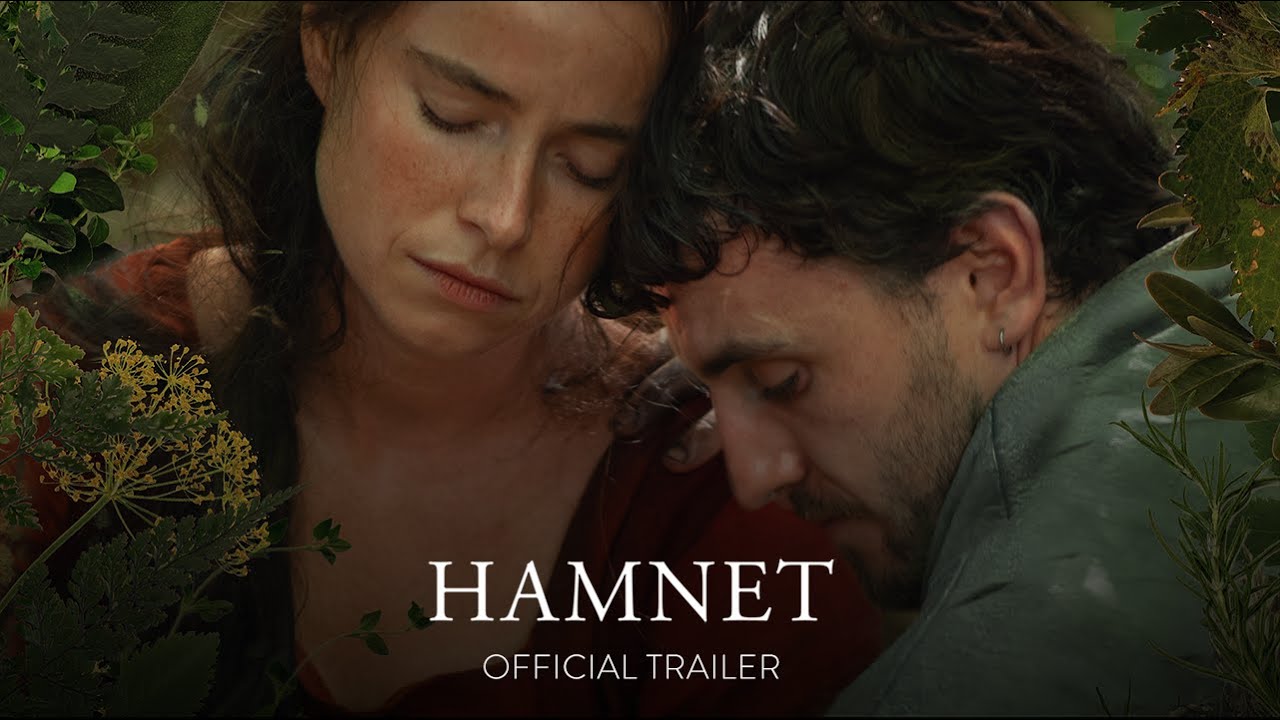
Starring Jessie Buckley and Paul Mescal — and released in UK cinemas on January 9 — Hamnet tells the story of Agnes, otherwise known as Anne Hathaway, as she deals with marriage and motherhood in 16th-century Stratford-upon-Avon. When her and her husband William’s 11-year-old son Hamnet falls ill and dies, the family is utterly distraught. But as Shakespeare himself counselled in As You Like It, ‘sweet are the uses of adversity’, with this appalling tragedy inspiring some of his most enduring work.
Three years after his son’s death, the playwright began Hamlet, which prompted O’Farrell to try and link life and art, as Hamlet himself says to Horatio:
‘If thou didst ever hold me in thy heart,
Absent thee from felicity awhile,
And in this harsh world draw thy breath in pain,
To tell my story.’

'Hamlet' was probably first performed in 1600 or 1601, when Shakespeare's company had only recently transferred to the Globe Theatre.
Originally, the events played out in Elizabethan London, where the plays were performed in theatres such as the Curtain, the Rose and the Globe, and the Bard’s birthplace in Stratford. It’s still the centre of the Shakespeare industry, with the house in which he was likely born and grew up located on Henley Street. The thatched farmhouse where Anne spent her childhood is likewise open to the public. And you can visit the Parish Church of the Holy Trinity, where Hamnet was buried on August 11, 1596. But to get to any of these places, you must do battle with Stratford’s one-way system and out-of-town retail parks, making you realise why director Chloé Zhao sought a more sparsely populated alternative.

Weobley is renowned for its stunning collection of timber-framed buildings, often called 'black-and-white houses'.
The northwest corner of Herefordshire is such a place, blessed with several untouched villages, including Dilwyn, Eardisland, Eardisley, Kingsland, Lyonshall, Weobley, Wigmore and Yarpole. Along with my home of Pembridge, they are known as the ‘black and white villages’ thanks to the Victorians’ penchant for tarring the timbers of the houses and whitewashing the wattle and daub. Underneath, however, the original Tudor — and much earlier — structures remain.
I’d love to claim that Pembridge was home to Hamnet, with its (very old) New Inn, an incomparable place for a pint and a pie, as well as the extant butter market and the ancient bell tower. But the rumble of the Tarmac lorries along the A44, the village’s main thoroughfare, can sometimes mar the Shakespearean atmosphere. So the Hamnet team went a little further south, to Weobley.
Set back from the main roads, with a market square easily closed off to traffic, Weobley became Stratford during the summer of 2024. Bar the odd blue screen panel to cover up petrol pumps, streetlights and post boxes, the place was left more or less intact. And while a few bales of hay were placed on mud-sprayed streets to conceal the road markings, most locals didn’t notice, given the usual preponderance of farm traffic. Instead, the village itself did the work, with its crooked streets and cruck-framed houses sloping down to the parish church, as captured on a railway poster in the 1950s.
Having found a suitable ‘Stratford’, the filmmakers also had to locate a setting for more intimate scenes. Hamnet often harks back to Agnes’s childhood on Hewlands Farm, the homestead in Shottery now known as Anne Hathaway’s Cottage. For this, even Weobley proved a little too metropolitan, so they journeyed further west, to the border with Wales.

The chosen property even has a Welsh name, Cwmmau, with location fees used to fund vital conservation work at this Elizabethan farmhouse. It is owned by the National Trust and from March 2026 will once again be available as a holiday cottage, with a new kitchen and new bathrooms, as well as paint and papers donated by Little Greene. For a week or two, you too can live the Shakespearean life.
When you drive to Cwmmau, down snaking lanes, it certainly feels like you’re intruding on time, though the impressive outbuildings and the main house give a feeling of self-sufficiency. Only the views to Hay Bluff, Twmpa and the Brecon Beacons beyond indicate there might be a world outside. For all its glories, however, Cwmmau was chosen for its remoteness, mirroring the isolation of Agnes’s childhood after the death of her mother. Escaping the clutches of her cold stepmother and distant father whenever she could, she retreated into the nearby woods and immersed herself in Nature.
We cannot be sure whether either Agnes or her husband ever visited Herefordshire. The Lord Chamberlain’s (later King’s) Men, the company for whom Shakespeare wrote for most of his career, certainly travelled to nearby Shrewsbury, Gloucester and Worcester. While no record survives, it seems unlikely they would have missed out the cathedral city of Hereford. But even without a direct connection, Shakespeare definitely knew the area, as it’s mentioned several times in his plays.
At Pilleth, 10 miles north of Cwmmau, an appalling battle between the English and Welsh is described in Henry IV Part I:
‘…the noble Mortimer,
Leading the men of Herefordshire to fight
Against the irregular and wild Glendower,
Was by the rude hands of that Welshman taken,
A thousand of his people butchered.’
The same Mortimer family, once the most powerful in the Marches, was likewise associated with another local battle, at Mortimer’s Cross, mentioned in Henry VI Part 3. But rather than specific events, it is a quality of life and experience, still tangible in Herefordshire, that helps us understand the playwright’s worldview. You can really touch history here, as I learned when I first moved to the county and was inspired to write A Home for All Seasons. Blink, ignore the car you’re sitting in, and it could be the Middle Ages, given how little the settlements have changed. You can almost hear the stamp and bagpipes of peasants, with their white hose and scarlet tunics, accompanied by clattering empty pitchers. And it is such a beautiful county, the very picture of what England is in the collective mind’s eye, with villages of black-and-white houses nestled among rivers, farmland and hop gardens. As a local and suitably Falstaffian shop owner bragged: ‘Civilization begins west of the A49, just don’t tell anyone.’
Rudely, of course, I betrayed his request, as many others have done before and since, including the makers of Hamnet. But I’m glad whenever people come to Herefordshire and discover the rips in time that are revealed here. It’s where Shakespeare’s world becomes yours. All you need are some sturdy boots and a copy of the Complete Works.
‘A Home for All Seasons’ (Atlantic Books, £10.99) is available in all good bookshops.
