Why has everyone fallen under the spell of Wrotham Park — one of the largest private houses inside the M25
Wrotham Park, the seat of the Earls of Strafford, is not open to the public and hardly any interior photographs are available to view online. So why do film directors, photographers and luxury brands continue to flock to it?


It is not hard, when watching Theo James write his whimsical screenplay on a typewriter, tinker with a motorcycle and frolic with micro-pigs (yes, you read that correctly) to understand why luxury shoe brand Church’s chose to film their latest campaign at Wrotham Park (below). With its stunning Palladian architecture and expansive 2,500 acre grounds located within the M25, it really does have it all.


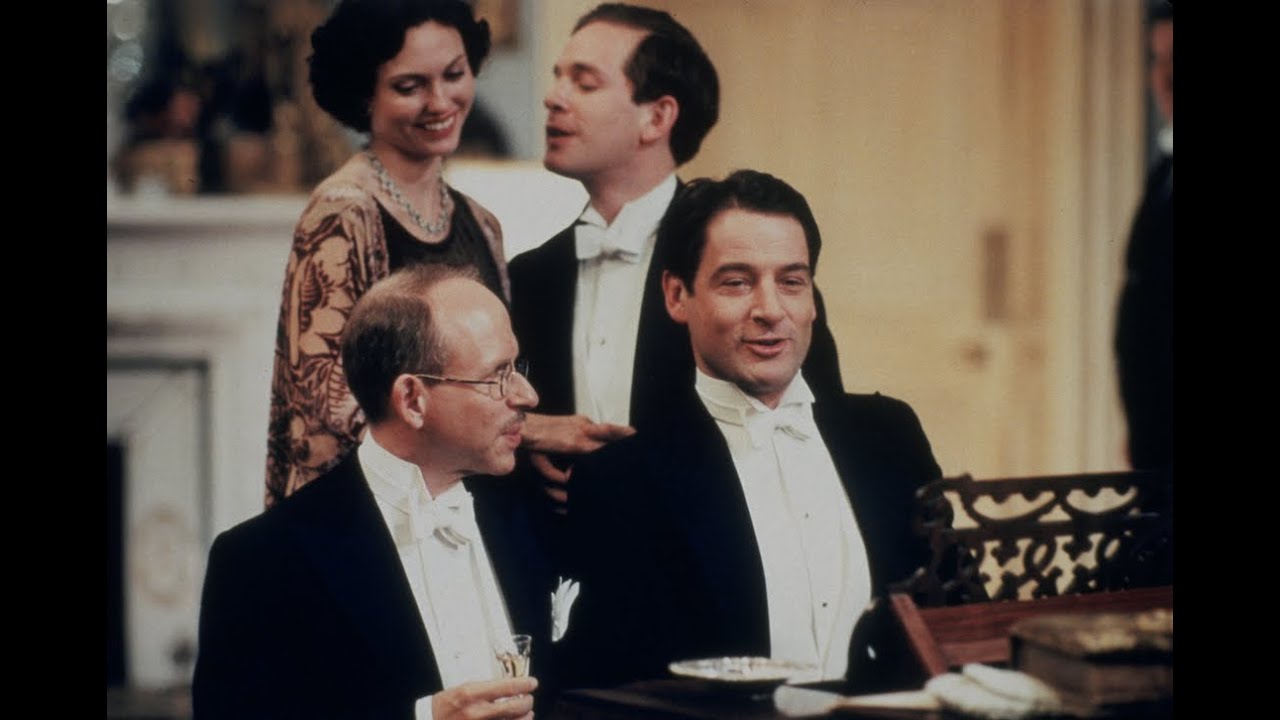
But it is not just Church’s who are besotted with Wrotham Park, the estate has long been capturing the imaginations of brands, film makers and artists across many mediums. Wrotham Park has been used as a shooting location more than 60 times which means that chances are you will recognise its famous imposing exterior if you’ve ever watched television (Poirot, Downton Abbey, Bridgerton) or seen a film (Gosford Park, Bridget Jones's Diary) in the past 50 years.
In fact, Wrotham Park has been a subject of fascination within these very pages numerous times over the past 130 years with the first mention of the estate in Country Life dating back to November 1918. The piece by Arthur T. Bolton explores the rather compelling and convoluted family history of the long-time owners, the Byngs, alongside photographs showcasing the house exterior and grounds including lush landscaped gardens and a magnificent winding drive.

The photographs above and below were both taken exclusively for Country Life, in 1918 and 2002 respectively.

There was a resurgence in interest in the early 2000s when the film Gosford Park, in which Wrotham Park served as the primary location for exterior shots as well as some upstairs interiors (downstairs was filmed on a sound stage; bedrooms at Syon House), was released. The house was featured agains inside this magazine's pages in 2002, and it is with some measure of frustration that the author, Tim Knox, describes the ‘questionable Victorian improvements’ that were undertaken by William Cubitt and Company in the late 1800s. You can’t help but get the sense that anybody interested in Wrotham Park just wants to get their hands on it.
When reading about the estate it’s impossible not to get drawn into the history behind it. Acquired in approximately 1750 by Admiral of the Blue John Byng, the estate, originally called Kicks End (rather less grand), was rebuilt by the architect Isaac Ware in 1754. If you have not heard of Byng because of his association with Wrotham Park you might unknowingly be aware of his death — court martialled and executed for negligence after serving in the Seven Years War — because it was satirised in Voltaire’s Candide, when the eponymous character notes: ‘in this country, it is good to kill an admiral from time to time to encourage the others.’


The house survived a disastrous fire in 1883 in which, thankfully, nearly all of the major artworks were saved and are still on display to this day, but the building itself was gutted. The house was faithfully reconstructed afterwards and is still owned by the same family, now run by William Robert Byng, 9th Earl of Strafford, who gave up a career as an insurance broker to dedicate himself to the estate full time.
Aside from the obvious draw of Wrotham Park to artists and brands — that it is less than an hour away from most major London production studios — there is clearly far more to its allure to those who wish to capture it on camera. Perhaps it is the fact of its reinvention and its resilience that keeps filmmakers and photographers fascinated by this estate. There is something rather whimsical and romantic about its beauty, about its barely changed 18th Century interiors, something particularly British in the eccentricities of its history.
There is also something undeniably enchanting about how unknowable it is. This estate is not open to the public. The Byng family now lives in one part of the house, renting the rest out for commercial filming projects, but no visitors are allowed. In the early 2000s, when English Heritage announced a project called ‘Images of England’, where photographs of stately homes would be available to look at on the internet, its custodian was one of its loudest critics, describing it as a ‘gross intrusion of one’s privacy.’ If you are so inclined you are now able to peruse a limited number of images of the interiors of the house on the estate’s own website.
As such, we can only experience the beauty of the estate briefly, in costume and in glimpses on our screens, and in the Country Life Archive, lending so much to the imagination. It gives Wrotham Park almost a dream-like quality. It is rather wonderful that it remains just out of our reach.
Church's new Spring Summer 2026 collection is available to shop now. Click here to see more.
The Country Life Image Archive contains more than 150,000 images documenting British culture and heritage, from 1897 to the present day. To search and purchase images directly from the Image Archive, please register here.
