
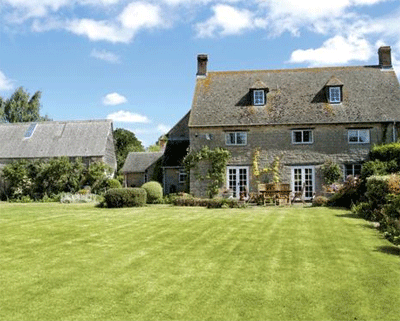
17th century farmhouse in Fritwell, Oxfordshire
This 17th century farmhouse is located on the edge of the traditional north Oxfordshire village of Fritwell

The Farm is an attractive 17th century farmhouse, listed Grade II, set on the southern edge of the village of Fritwell. The house is believed to date back to 1637 and retains some exceptional period features including open fireplaces and exposed beams, giving the house great character.
The original house has also been sympathetically extended to create additional accommodation which in total comprises: drawing room, dining room, family room, breakfast room, kitchen, utility room, cloakroom, master bedroom suite and four/five further bedrooms plus two further bathrooms.
* Country Life makes a fantastic Christmas present: Give Country Life for Christmas this year and save up to 30%
To the west of the house is a traditional stone barn which has planning potential subject to permissions and opposite are the old stables which have been converted into a garage block. The gardens are prettily planted and extend to around an acre.
The Farm is located in the village of Fritwell in North Oxfordshire which has a shop, post office and a village inn while more extensive amenities are to be found in the nearby towns of Bicester (which has trains to London Marylebone), Banbury and Oxford.
The guide price is £995,000. For further information please contact 01865 790 077 or visit www.knightfrank.co.uk.
* Country Houses for sale in Oxfordshire
* Follow us on Twitter
