‘I’m like: “Give me those tights, let me show you”: Ballet superstar Carlos Acosta’s consuming passions
Born one of 11 children in a Cuban slum, it’s been 36 years since Carlos Acosta’s career as an internationally famous dancer formally began. Lotte Brundle meets him at the Birmingham Royal Ballet, where he is the director.


Although Carlos Acosta is leaning against the ballet barre at the front of the room in a pose that one might mistake for being casual, he is lithe and laser-focused as his eyes trace the young dancer’s movements across the floor. His head inclines slightly with each change of direction, perhaps in yearning. Dressed all in black, the director of the Birmingham Royal Ballet does not look his 52 years of age; in fact, most 52-year-olds would, I imagine, kill to look as good as he does. He is a sexy guy.
Carlos is retired, but he does not look ‘retired’ in any sense of the word, as he supervises the young dancers as they rehearse, tapping his Chelsea-boot clad feet in time with the music. As the music of Don Quixote swells, I can see him itching to run into the middle of the room and perform the powerful leaps and jumps of the routine he knows so well — it was, after all, a dance from this very ballet that won him the gold medal, aged just 16, at the international dance competition Prix de Lausanne in 1990, launching his career.
'I remember thinking: "That's a cool thing, I want to carry women with one hand as well”’
36 years later, the Cuban ballet dancer is no less desperate to dance. ‘[I miss it] all the time,’ he says. ‘I’m like: “Give me those tights, let me show you,” but of course I can’t [anymore, in the same way].’ Carlos has danced with the English National Ballet, the National Ballet of Cuba, the Houston Ballet and the American Ballet Theatre. He was with The Royal Ballet from 1998 to 2015. It is in Havana, in the 1970s, that he grew up, as one of 11 children living in a slum. Born to Dulce Maria Quesada and Pedro Acosta, now divorced, he was their youngest child. It was his truck-driver father that forced him away from breakdancing on the streets for the approval of gangs and into ballet classes, which he initially hated, but attended for the free lunch. He wanted to be a footballer originally, but ballet won out. ‘My father forced me. He chose this art for me, against my will, but I had a skill — I could apply movement to my body very quickly,’ he recalls. ‘The moment [I knew I wanted to do it for a career] was when I saw the professionals at the National Ballet of Cuba. They could jump and they could carry a ballerina with one hand. I remember thinking: 'That's a cool thing, I want to carry women with one hand as well.”’

Daria Stanciulescu as Dulcinea in Carlos's production of 'Don Quixote' at the Birmingham Hippodrome, earlier this year.

Carlos Acosta and Marianela Nunez performing a scene from 'Don Quixote' in 2016.
Dance is what saved him. ‘My house was very complicated. My father, at some point, was in jail. My mother had a brain hemorrhage. In our home, my eldest sister was the one who cooked, and what she managed at 14 years old was kind of like a chemical experiment. You could call it rice, but that wasn't rice. It was hard, but I found, in ballet, a winning ticket.’ It is hard to overstate the extent of Carlos’s success in the dance world. He became to ballet what Freddy Mercury was to music — and it gave him confidence. ‘Growing up, I didn't think I was special. I was in a limbo. I didn't know what was going to be my life. But then every time I performed, I heard the applause. It made me feel: “Oh, I exist. I'm somebody.”’
Carlos received a CBE in 2014 for his services to ballet and created his own company of young talent from Cuba in 2016 called Acosta Danza. A film of his life, which he starred in, titled Yuli: The Carlos Acosta Story, premiered in 2018 and he has written two books: his autobiography, No Way Home, and a novel, Pig’s Foot, which the Guardian deemed ‘elegant and seductive’. He joined Birmingham Royal Ballet as its director in 2020. It is his first ‘non-freelance’ job, he tells me. He is married to Charlotte Holland, a writer and a former model who, he told The Times in 2016, he ‘tried to persuade ... to go out with [him] for a year’. It must have worked, as together they share three daughters: a 14-year-old and nine-year-old twins. His sparsely decorated office features a monthly calendar, filled with red stickers and various events, a bottle of Bollinger next to his honorary degree from the University of Birmingham, and a card from his children, presumably written while he was on tour. In pastel colours is scrawled: ‘Daddy come back soon’.

Carlos with his daughter, Aila, during his final curtain call after performing 'Carmen' for the last time at The Royal Opera House in 2015.

With his wife, Charlotte Holland, at The Mayfair Hotel in 2013. He once told The Times that he tried to persuade her to go out with him for a year.
Alas, being on the road is a big part of Carlos’s career, although less so than when he was a full-time dancer. He’s delighted that the Birmingham company's production of Don Quixote and his company Acosta Danza’s Carmen will be going on tour. It is this that underscores what brought him to Birmingham Royal Ballet in the first place — a desire to make great dance accessible to all in the UK. ‘For the nation’s perspective, it’s great — so that everything is not London-centric. The Arts play a very important role in education, and it's always great that, instead of people waiting to come to places where art is happening, art goes to the people.’ He adds: ‘In the case of Acosta Danza, we are focusing on mid-scale theatres which, for instance, cannot normally afford, say, a production of The Nutcracker, because they are so tiny. I want to tap into that market, as Acosta is a small company, and it’s more mainstream.’
'I think it's a misstatement — that sense that when you pass a certain age, you're not relevant anymore. That's nonsense’
Alongside overseeing these rehearsals, the ‘retired’ dancer is gearing up to perform at the Royal Opera House this summer. ‘I'm really looking forward to performing and being on stage again,’ he tells me, excitedly. ‘I see [dancing] differently now. I try to choose a repertory that I know I can still deliver. I am not trying to do Romeo or something like that, I might break,’ he says, referencing the famously challenging ballet role. I ask why he doesn’t stop altogether: most ballet dancers are not still dancing in their fifties, after all. ‘Why would I have to disappear completely?’ comes the reply. ‘I don’t believe in that. I think that we are missing out on dancers, like myself, that have had an entire life in ballet. You have a presence — the way you walk, the way that you hold yourself, the way that you control the space. When you get to my age, you master that more than those who are still beginning.’ He adds: ‘I think it's a misstatement — that sense that when you pass a certain age, you're not relevant anymore. That's nonsense.’ It is clear that Carlos just can’t keep away from the stage, no matter how hard he tries (not that he is trying particularly hard). I think, happily, it will be a long time still before he hangs up his ballet shoes for good.
Your aesthetic hero
I am a very big fan of Mikhail Baryshnikov, because I think if you look at his career and the way that he conducts himself, I am a lot like him. He did it all. He directed, he became this incredible dancer, he did Broadway and then he became a contemporary dancer. Then came acting, the guitar, his photography and, ultimately, he created his own centre in New York. I mean, he kept evolving and evolving and at 78 is still relevant, and doing stuff — and that’s what I want to do.

Mikhail Baryshnikov walking the runway for VOGUE World in New York in 2022.
An exhibition that has really impressed you
A while back I saw an exhibition of a friend called Alejandro Pinedo, which impressed me. I really recommend it — really beautiful, large format painting, very abstract but always very pleasing to the eye, colourful, and it's all about Cuba. He's Cuban, so Cuba is all there, you know, the colour of the sea and the clouds and the blue sky, and so it's something that I instantly connect with and obviously the connection that I have with him as well helps.
A possession you’d never sell
I would sell anything if I needed to. It doesn’t really matter. Things come and go — that’s not a problem. There's something I'm working on now that I will really want to pass on to my kids, though. Particularly, if I was still around, I would never sell, but if they wanted or needed to sell it eventually, then it would be up to them. I can't say what it is yet.
The last thing of note that you bought for yourself
I’m about to buy a suit. That is going to be significant, but I haven’t bought it yet.

Carlos with the King and Queen watching a performance during their to the Acosta Dance Company in 2019 in Havana, Cuba.

Performing at The Royal Opera House in 2012.
Your favourite painting
I don’t have a favorite painting as such. I admire Francis Bacon a lot, but not to have on my wall, of course. I admire the paintings of my fellow Cuban Wifredo Lam, as well. I like Dalí too.
A book that you have found inspiring
At the moment I am reading a book by Ada Ferrer which is called Cuba: An American History. It won a Pulitzer award and it’s basically the history of Cuba in the context of America as a country, how the two nations have been — from way, way back — intertwined and working together. It's incredible to think about all these many details that we don't even nowadays know. Like, I didn't know, for instance, that the decisive fight that gave America the independence from the Brits in Yorktown, it only was possible because of fundraising that they did in Havana. Havana was very wealthy at the time. I find it very inspiring and interesting, full of detail. No wonder it won a Pulitzer.
The music that you work to
In my free time I don’t tend to put on any music. If I'm going to choreograph Carmen, or whatever, I stick to the music over and over again. At the moment, I'm working on a creation: The Maiden of Venice. I want to have my own trademark and my own sort of input into this classic, so therefore I hear the music a lot, over and over and over. But when I was writing, I didn't put music on in the background for inspiration. I like silence. It keeps me focused.

Polina Koroleva in Carlos Acosta's 'Carmen', which is going on tour.
The last podcast you listened to
I just flip through them. Joe Rogan sometimes gets really interesting people on, but I don’t listen to them from beginning to end. Obviously, politics — sometimes you need to follow a little bit, because the world is changing. And every day it changes. And you know, I need to know what’s going to happen in Cuba: I have my sister in Cuba, and my company.
What you’d take to a desert island
Either music or something to play music on, and in the music would be memories of my parents and the people that I love, and also the life that I'm living now. So I think music gives you so many choices. Also music gives you the opportunity to dance.
The thing that gets you up in the morning
Well, to be pragmatic nowadays, it's just school runs, or a train to whatever destination I need to go to that day. And in terms of coffee, I fluctuate. Lately I've been having a glass of water with lime, you know, for the immune system and everything, but sometimes I do have my cappuccino or something. It depends. I try not to be completely consistent in sticking to one thing, but to break habits.
The items you collect
I have a small collection of classic cars in Havana. It's small, only four, but they're really great. I love them because they are an old reminder of a time that is long gone.
The person that would play you in a film of your life
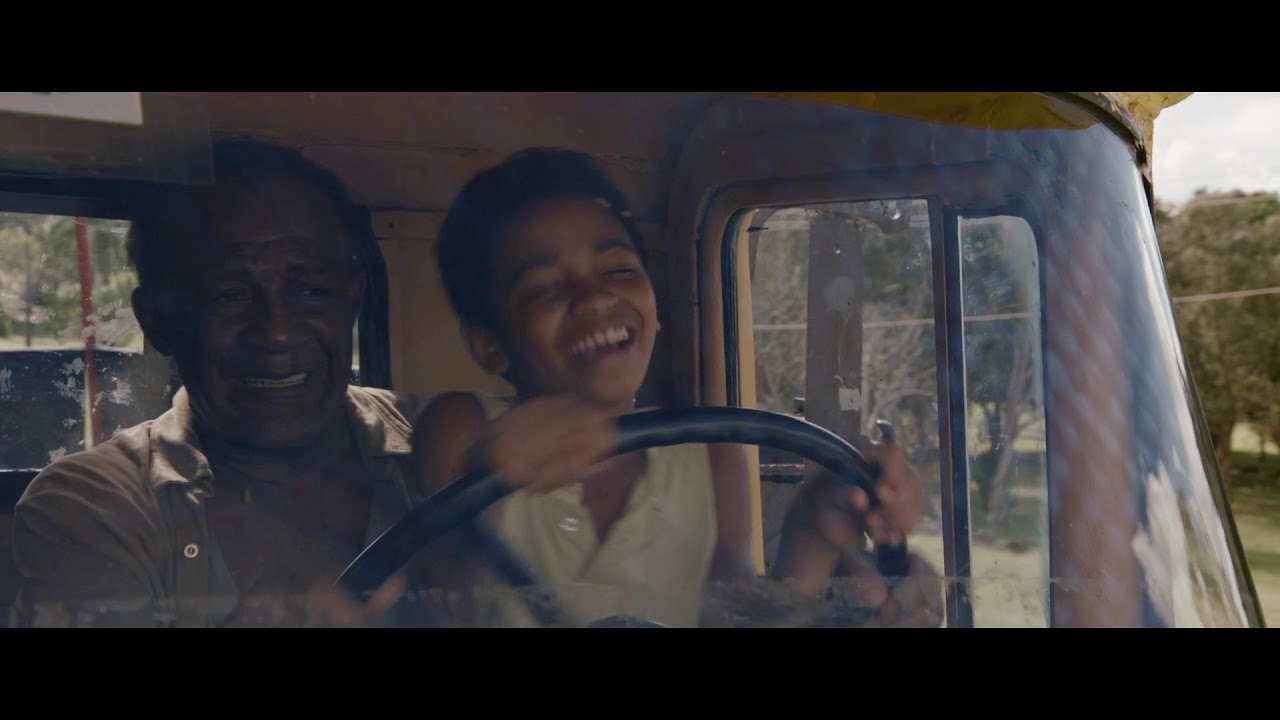
[A film of Carlos’s life, Yuli: The Carlos Acosta Story, has already been made. In it, for many scenes, Carlos played himself.] Obviously, you just have to trust the director. I mean, there's always a consideration, because it's my life and I had to be okay with, for example, who's going to represent my father. But, you sort of have to trust the team that they know what they're doing. Ultimately, it's a film of my life, not a documentary. In one of the early scripts, somebody wrote something that I couldn't believe, because it was so exaggerated. People were smoking, and I had spies from Cuba following me around. I said: ‘That didn't happen.’ Anyway, I'm very happy about the way the movie turned out. It has such integrity and also artistic values.
A hotel you could go back and back to
I am going to have to pass — I don’t remember the names!
The most memorable meal you’ve eaten
You know, everything is about family [for me]. I miss my parents a lot, and I miss the old days when my parents were around and everybody, including my sister, was alive. These meals were rice, beans — nothing fancy — maybe an egg fried on top, with plantain, something like that. My mother would cook, and everybody was around having a good time. It's more about what that meal brings to my memory than the actual meal itself.
The best present you’ve ever received
My kids. That relationship, the bond — everything that I do is for them.
Acosta Danza’s UK tour of ‘Carmen’ will open at Richmond Theatre (April 8-11 ) before touring to Aylesbury Waterside (April 15-18), Grand Opera House, Manchester (April 22-25), Brighton Theatre Royal (April 29-May 2) and finally New Victoria Theatre Working (May 6-9).
Birmingham Royal Ballet’s tour of ‘Don Quixote’ opens at Birmingham Hippodrome on February 12. The production will then tour to The Lowry, Salford (5 -7 March), Plymouth Theatre Royal (18-21 March), Mayflower Theatre, Southampton (15-18 April) and London’s Sadler’s Wells Theatre (23-25 April).
