
Period country house overlooking the River Wye
This considerable country property dates from the mid 19th century and sits in a stunning rural position overlooking the River Wye in Herefordshire

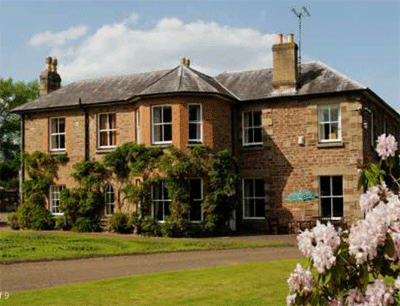
Wyeville dates back to the mid 19th century and was constructed of local sandstone with rusticated stone coins to the principal elevation. Throughout the house are high ceilings and deep sash windows ensuring light and airy accommodation with far-reaching views.
A particular feature is the outstanding oak panelling in the hall, drawing room and dining room, while the two carved chimney pieces and over-mantles. Accommodation in total comprises: panelled reception hall, three reception rooms, study, kitchen, self-contained ground floor flat and five/six bedrooms upstairs.
* Subscribe to Country Life and save 40%
Outside are formal gardens with extensive lawns flanked by mature trees and shrubs plus an ornamental pool. The house has around 5.5 acres which are made up mostly of the paddocks which benefit from a central lake.
Wyeville lies just over two miles outside Ross-on-Wye in Herefordshire. Monmouth and Newport are within easy reach, as are Cheltenham and Gloucester.
The guide price is £1.15m. For further information please contact Jackson-Stops & Staff on 01386 840224 or visit www.jackson-stops.co.uk.
* Country Houses for sale in Herefordshire
* Follow us on Twitter
